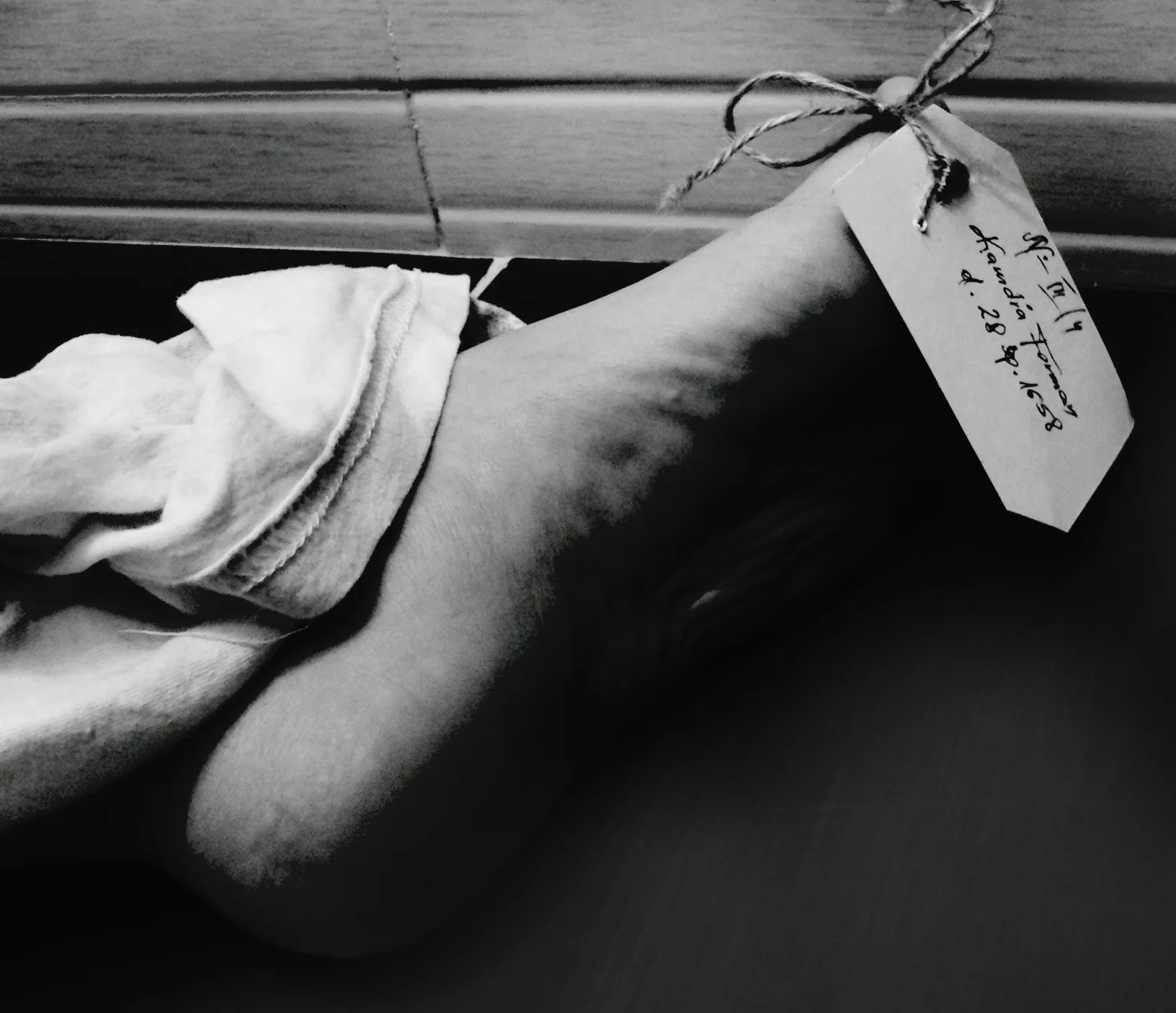
Dedication for Master
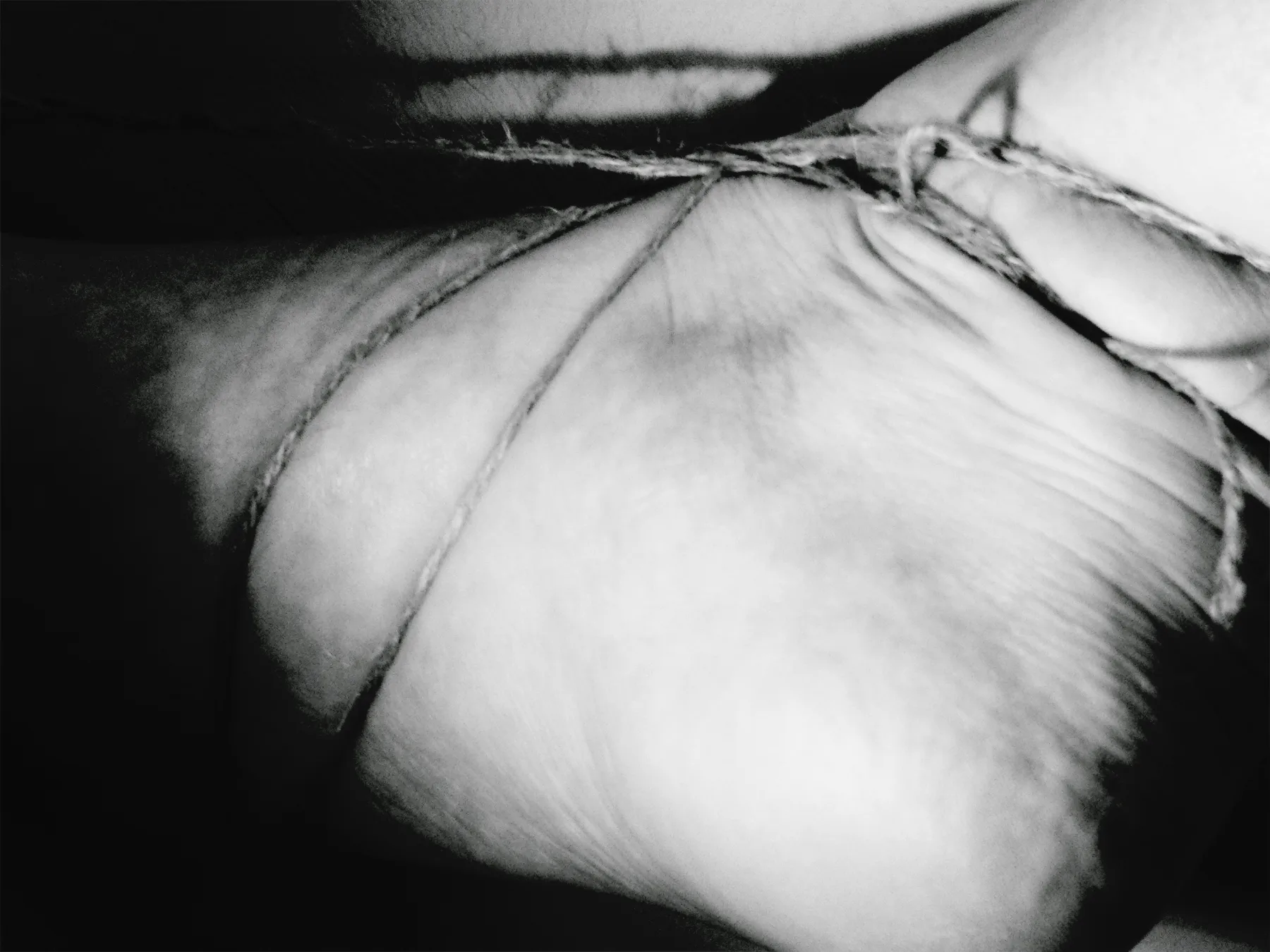
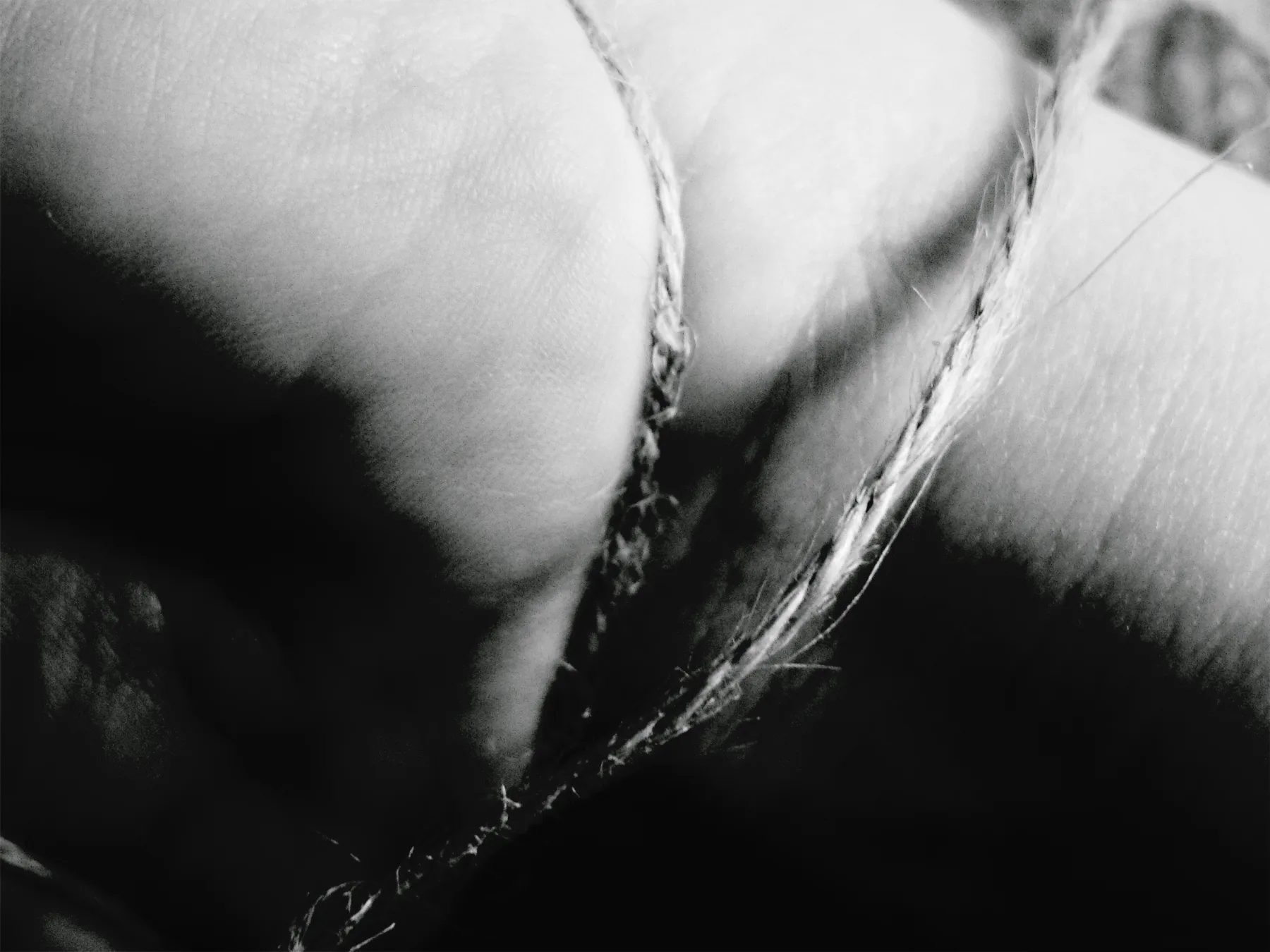
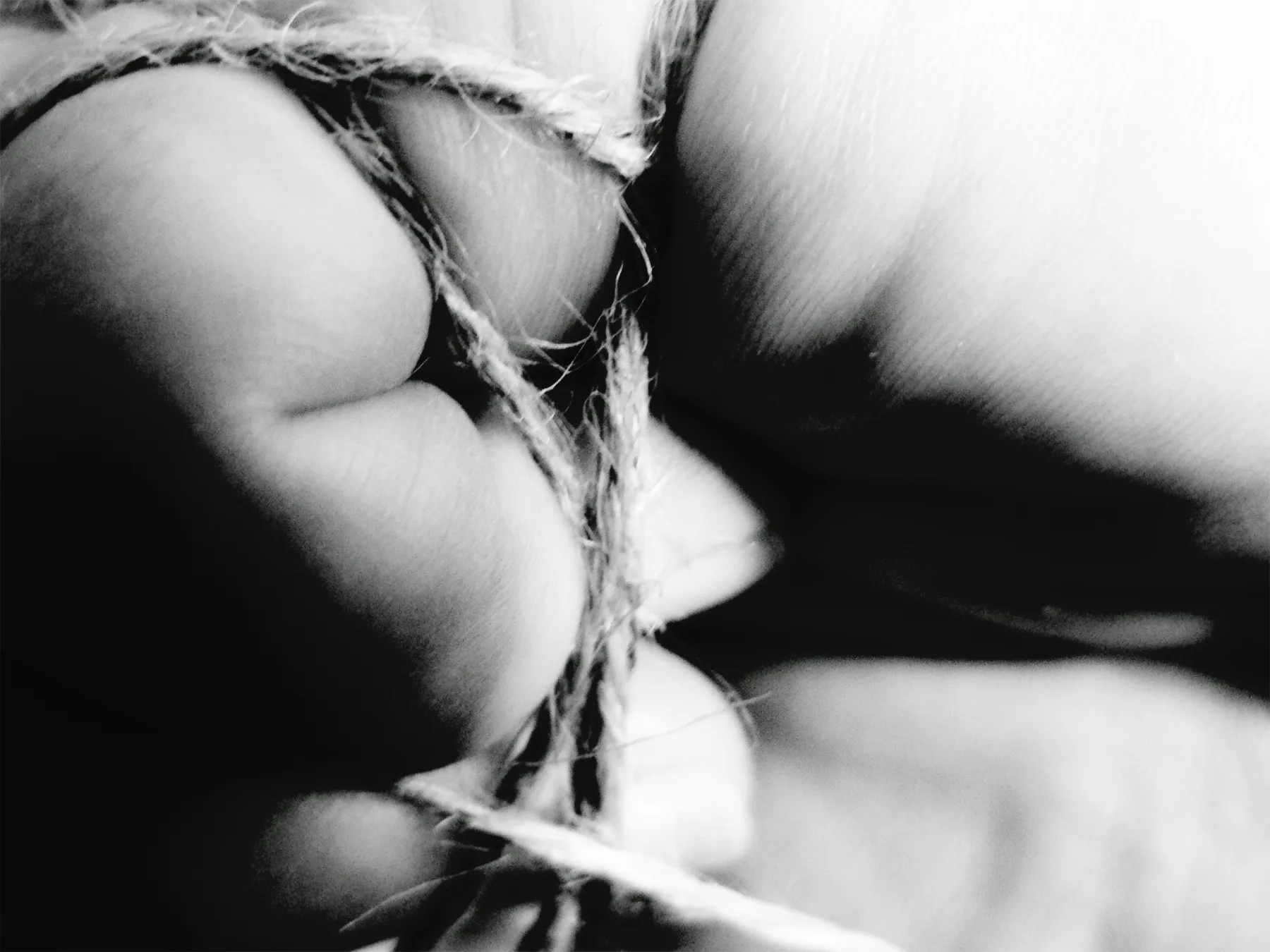
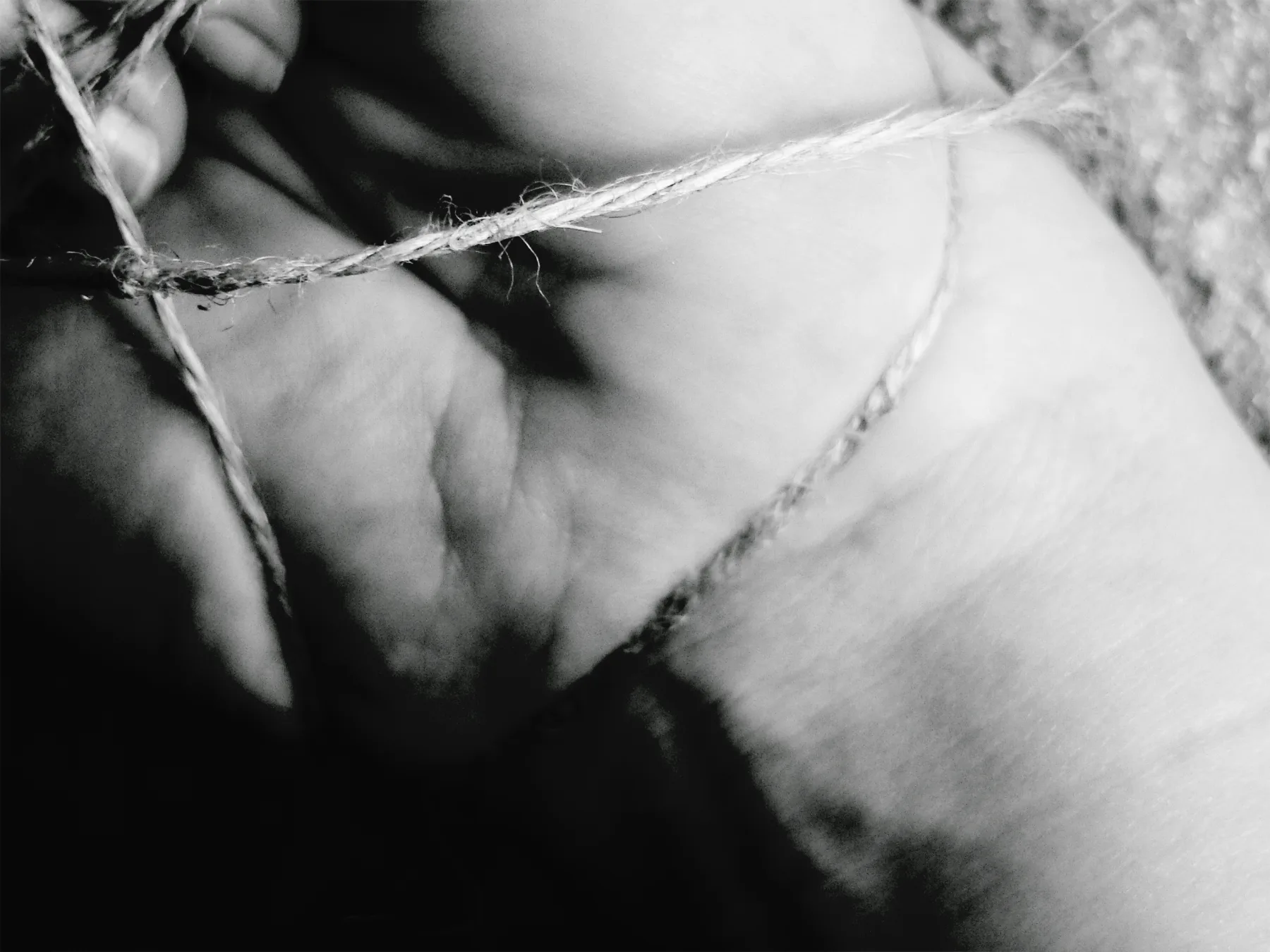
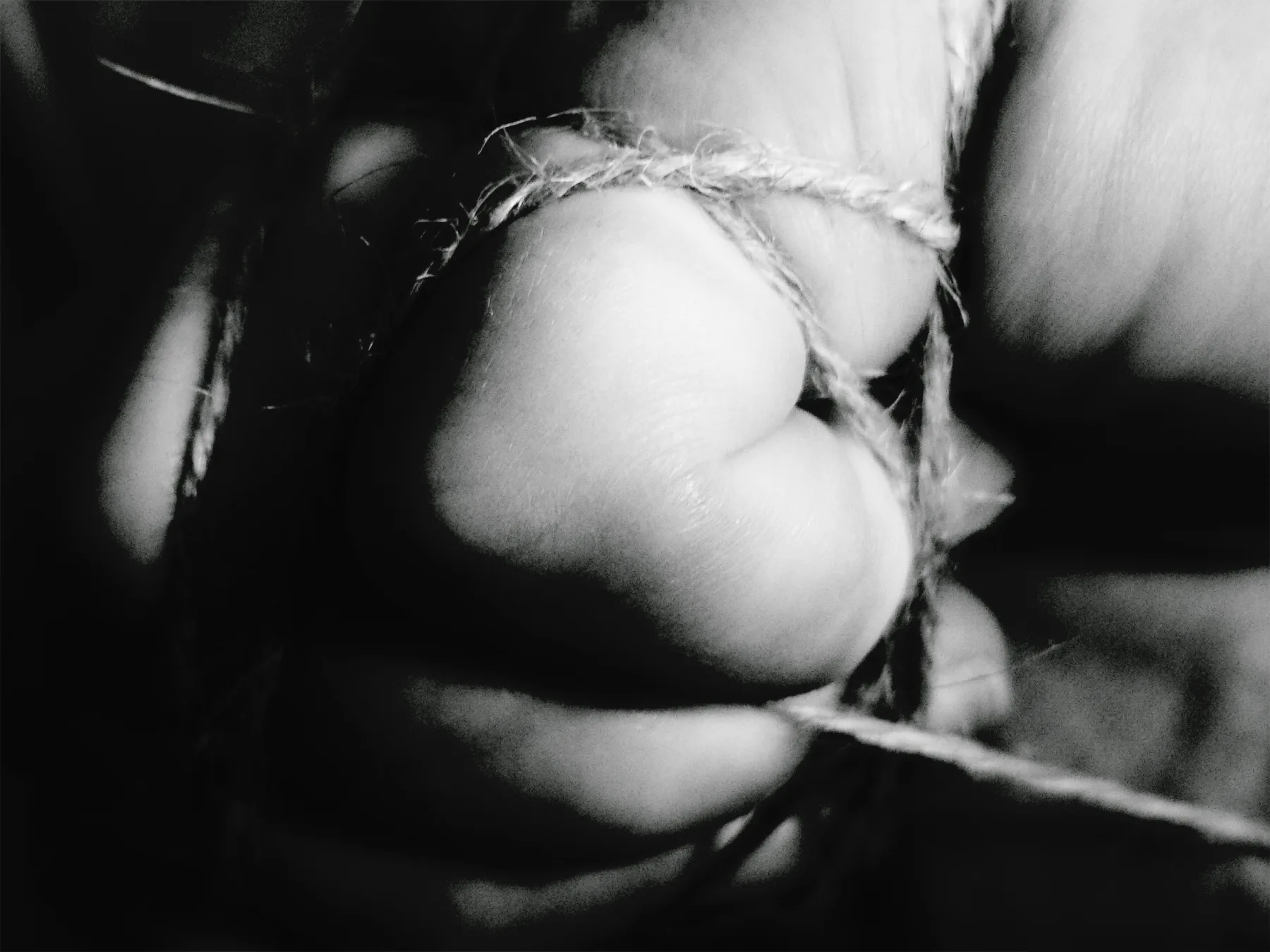
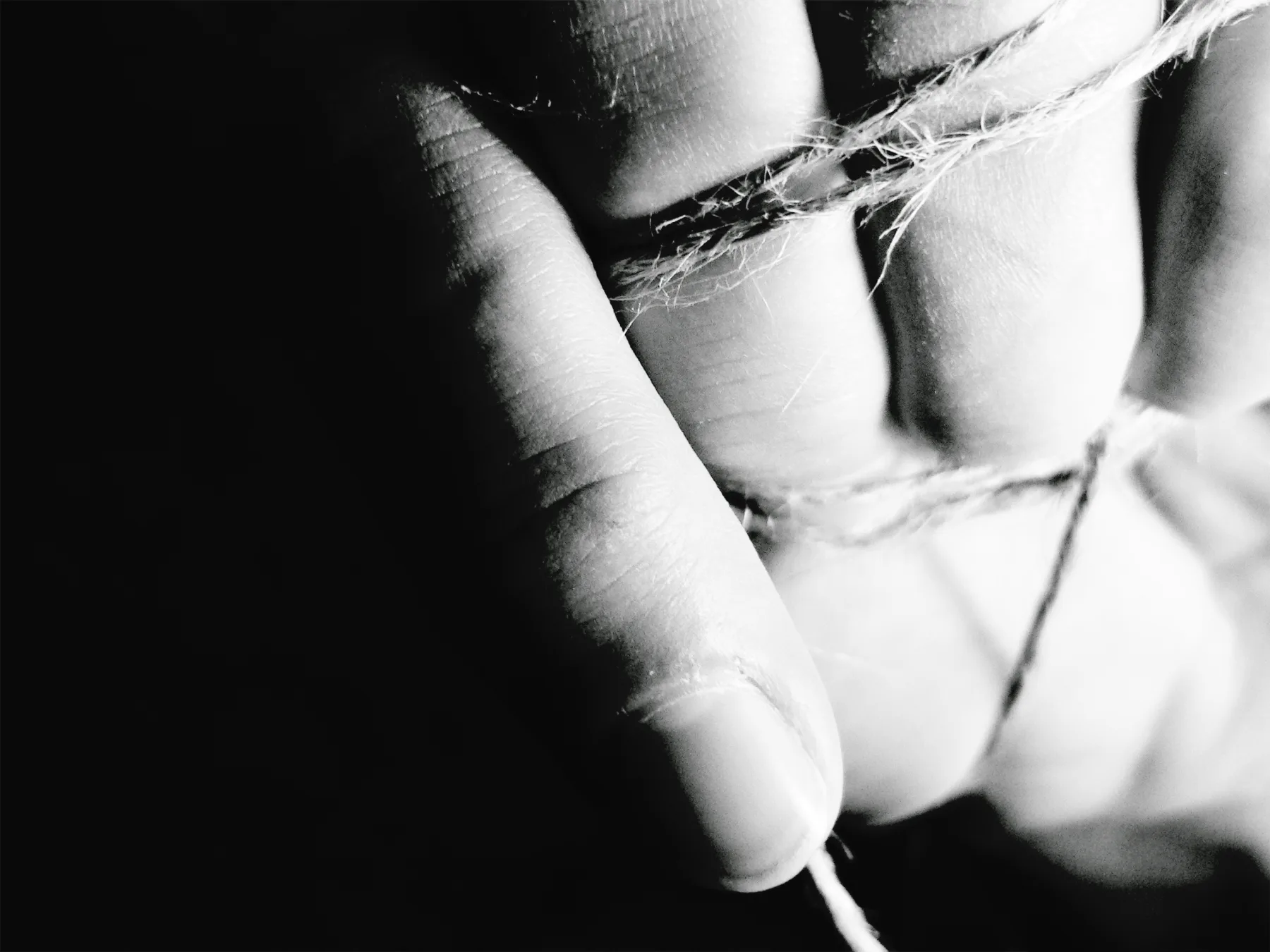
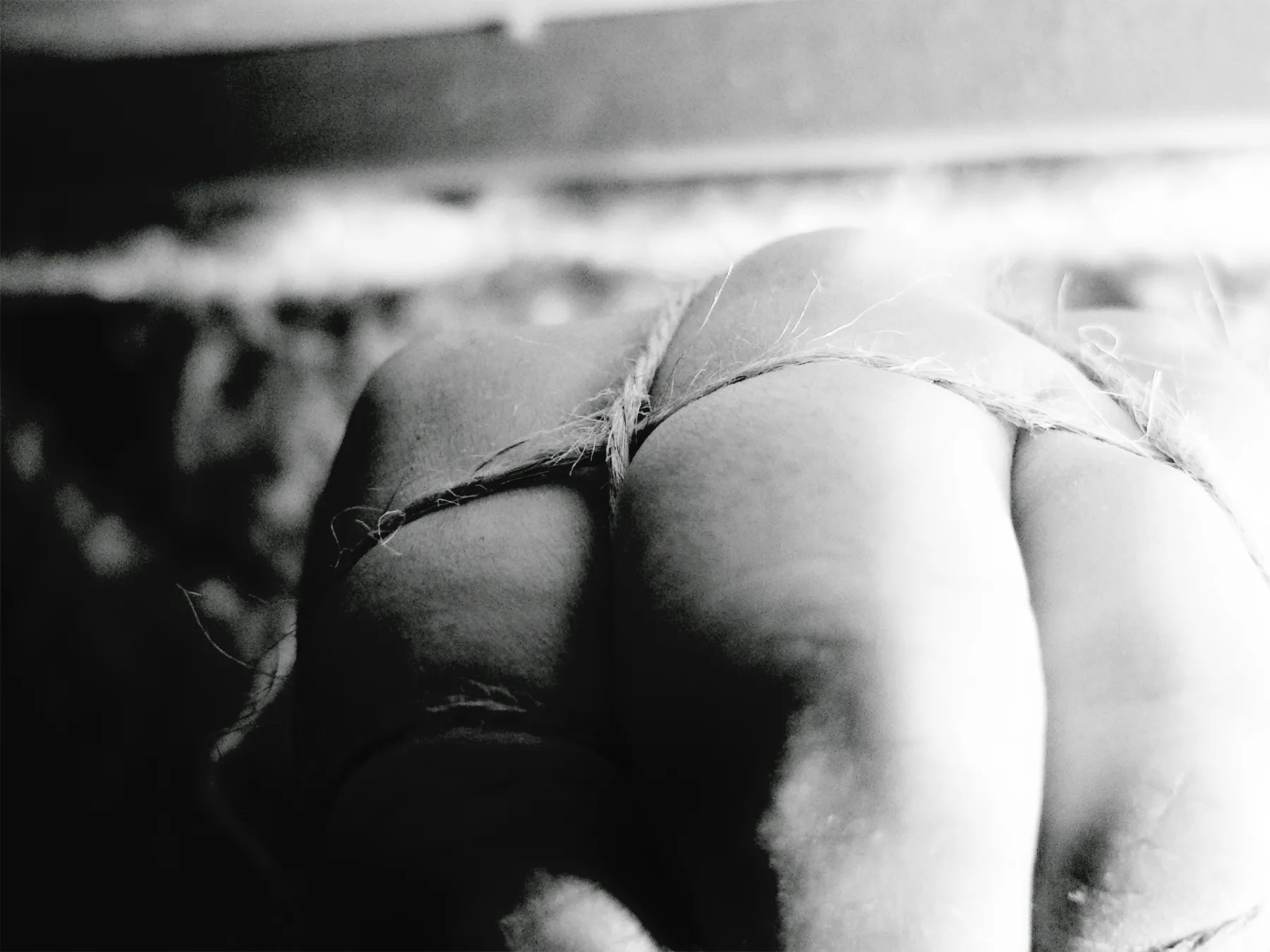
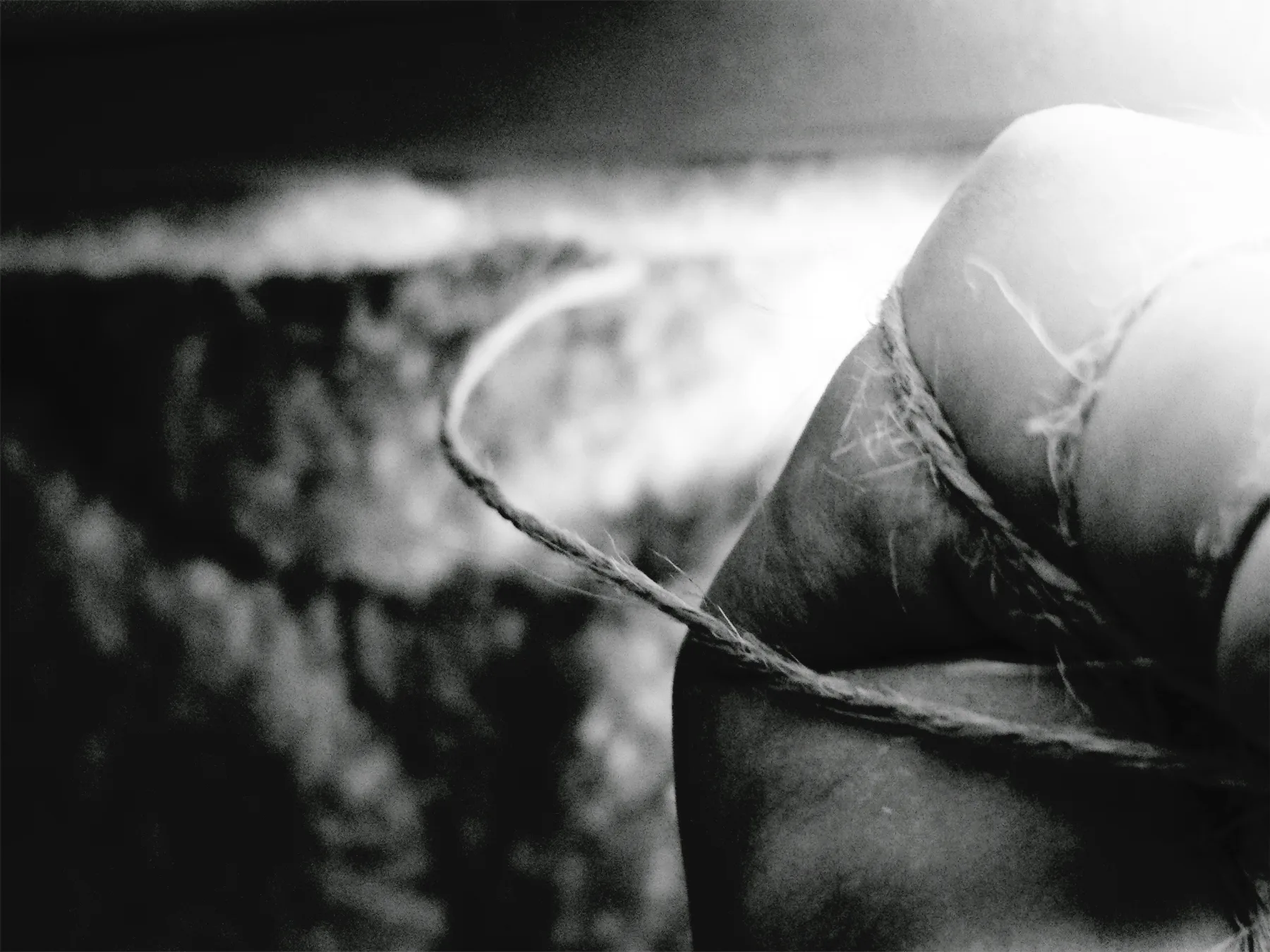
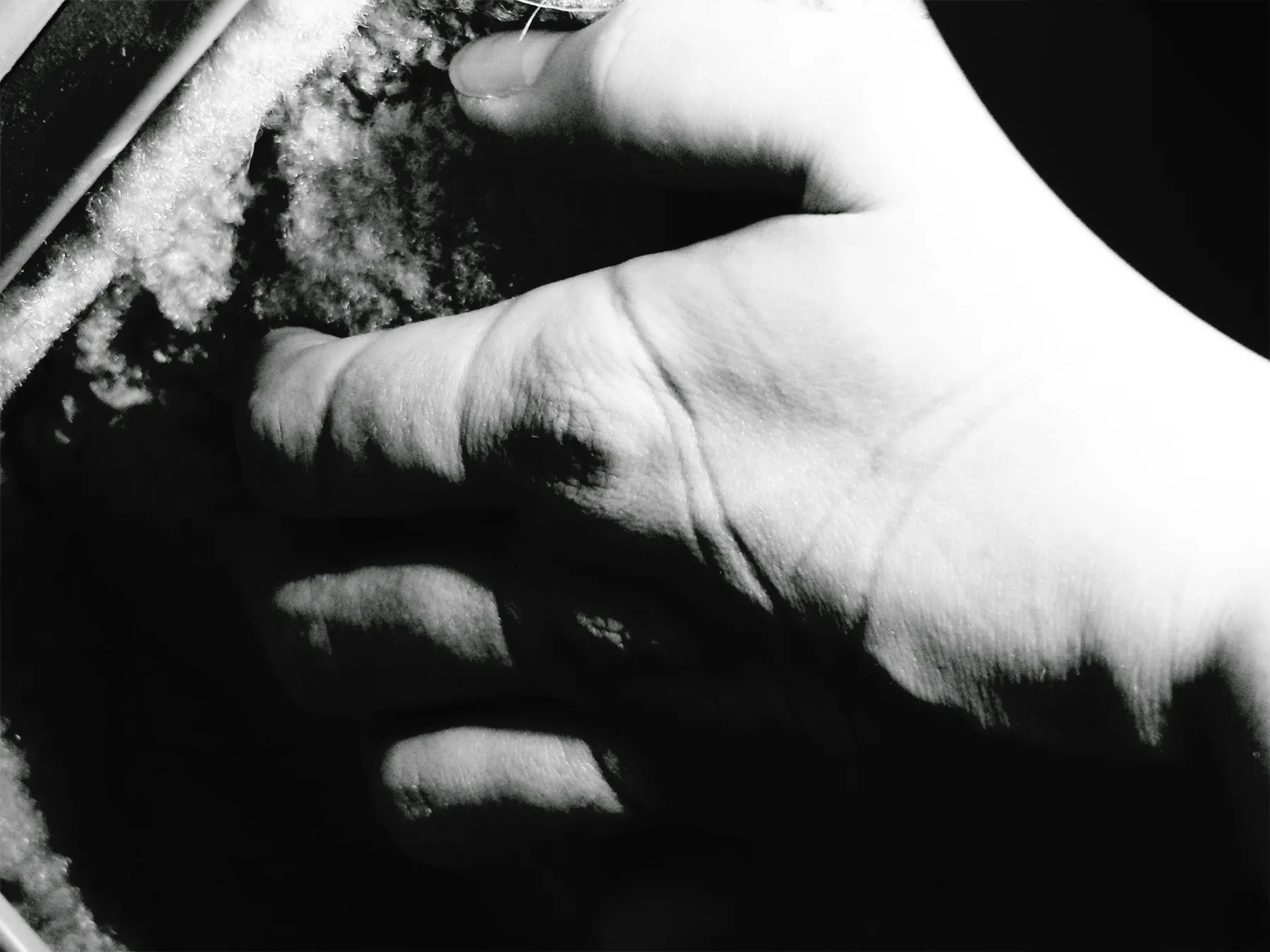
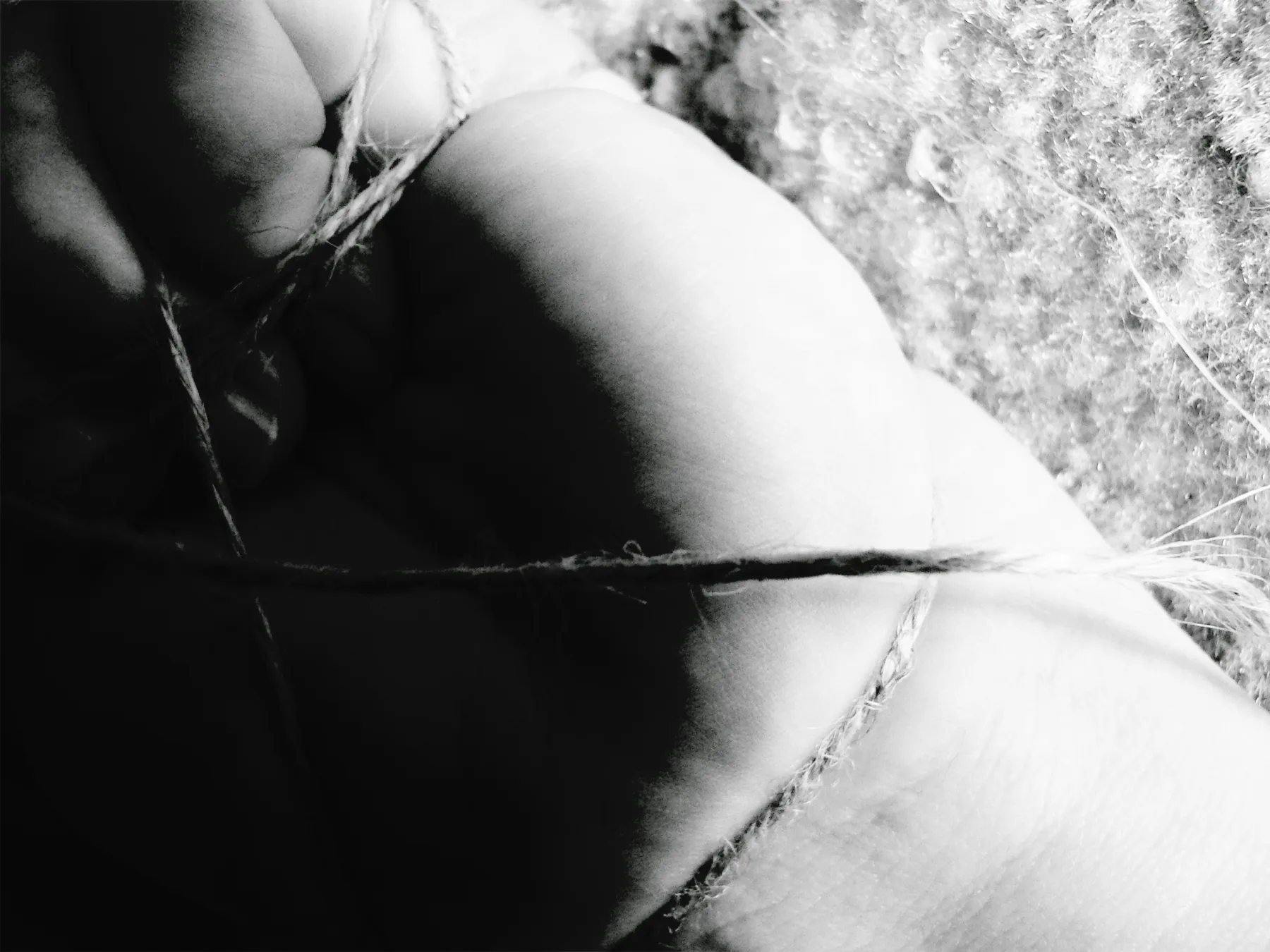
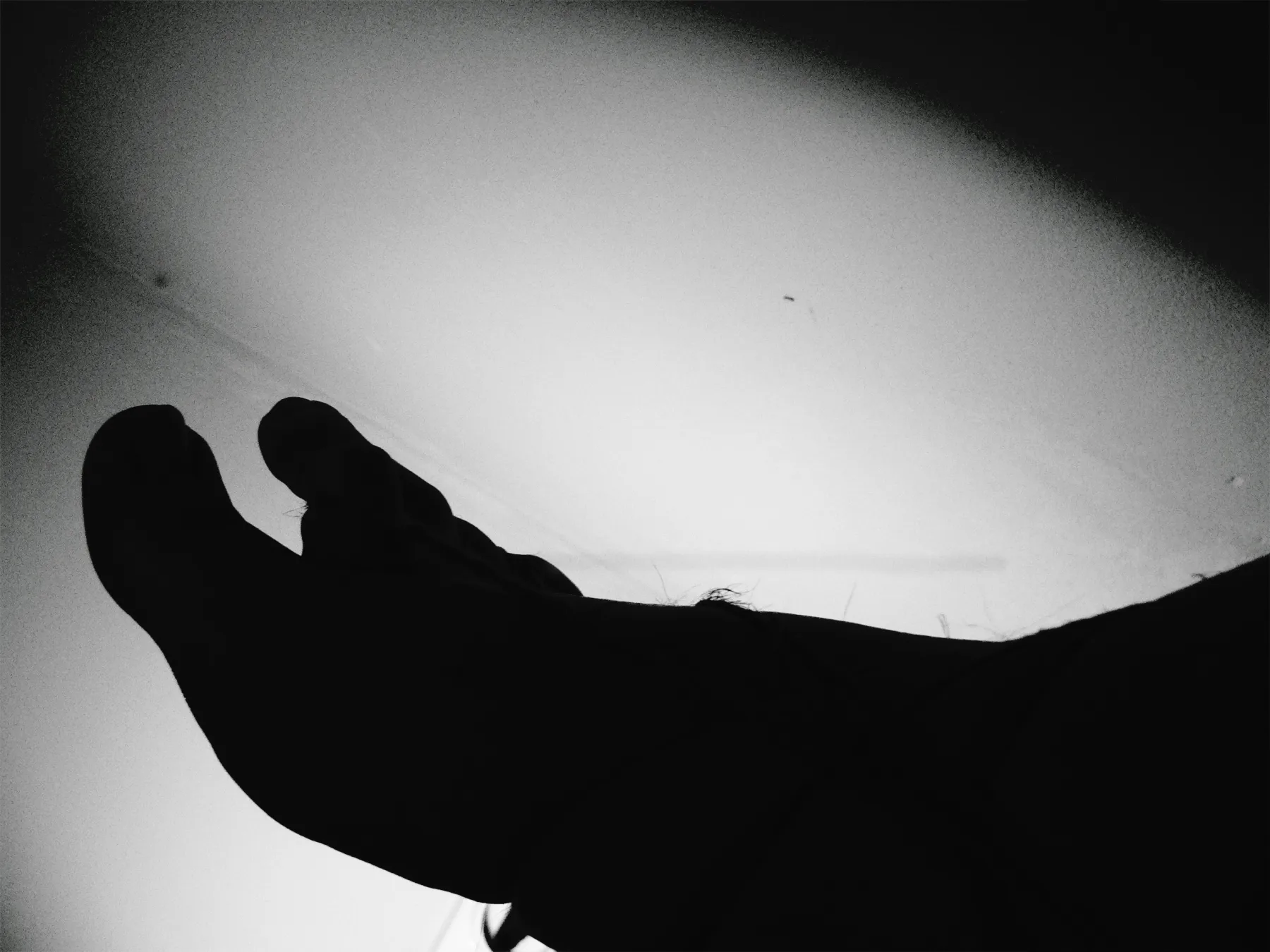
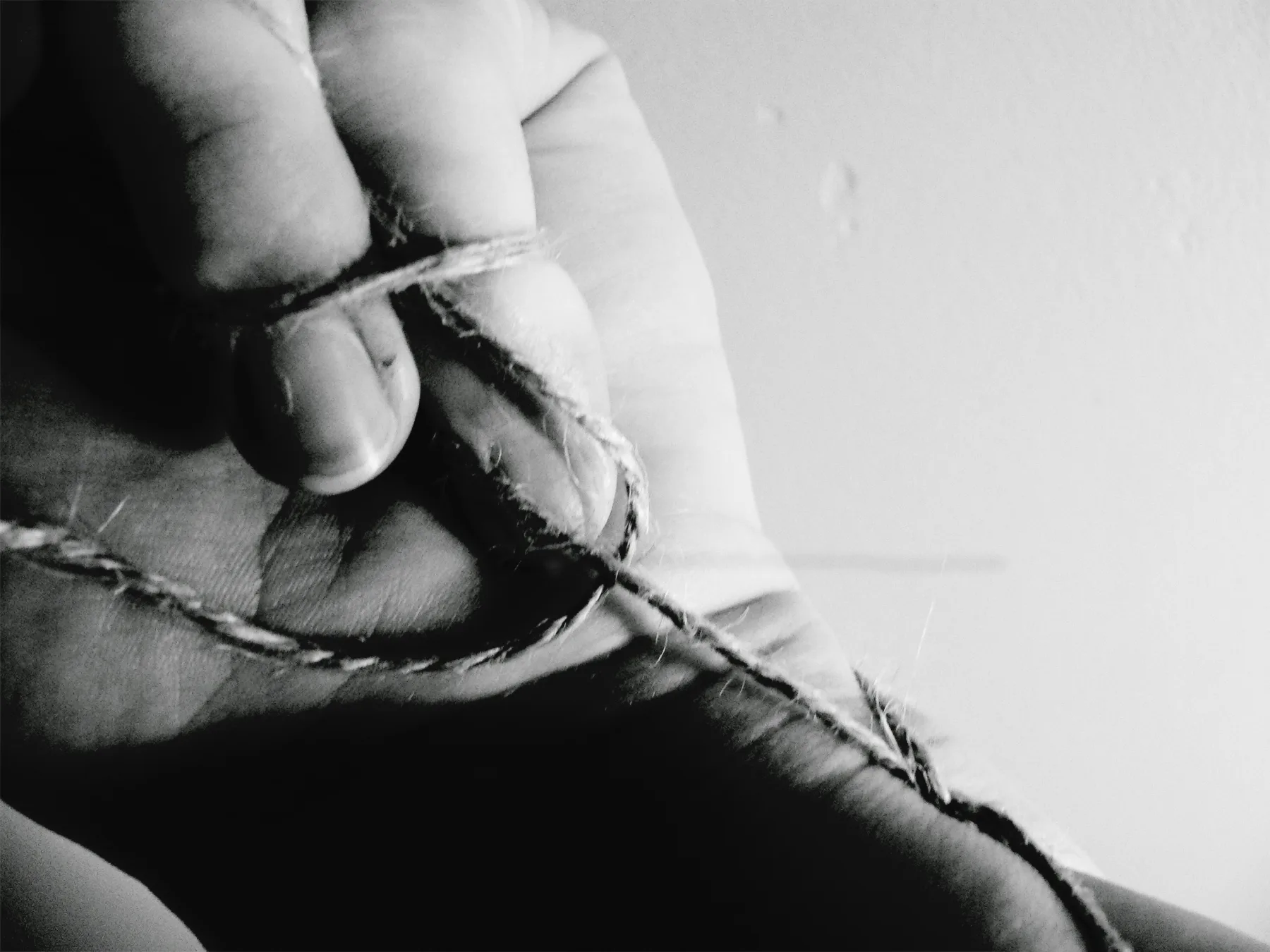
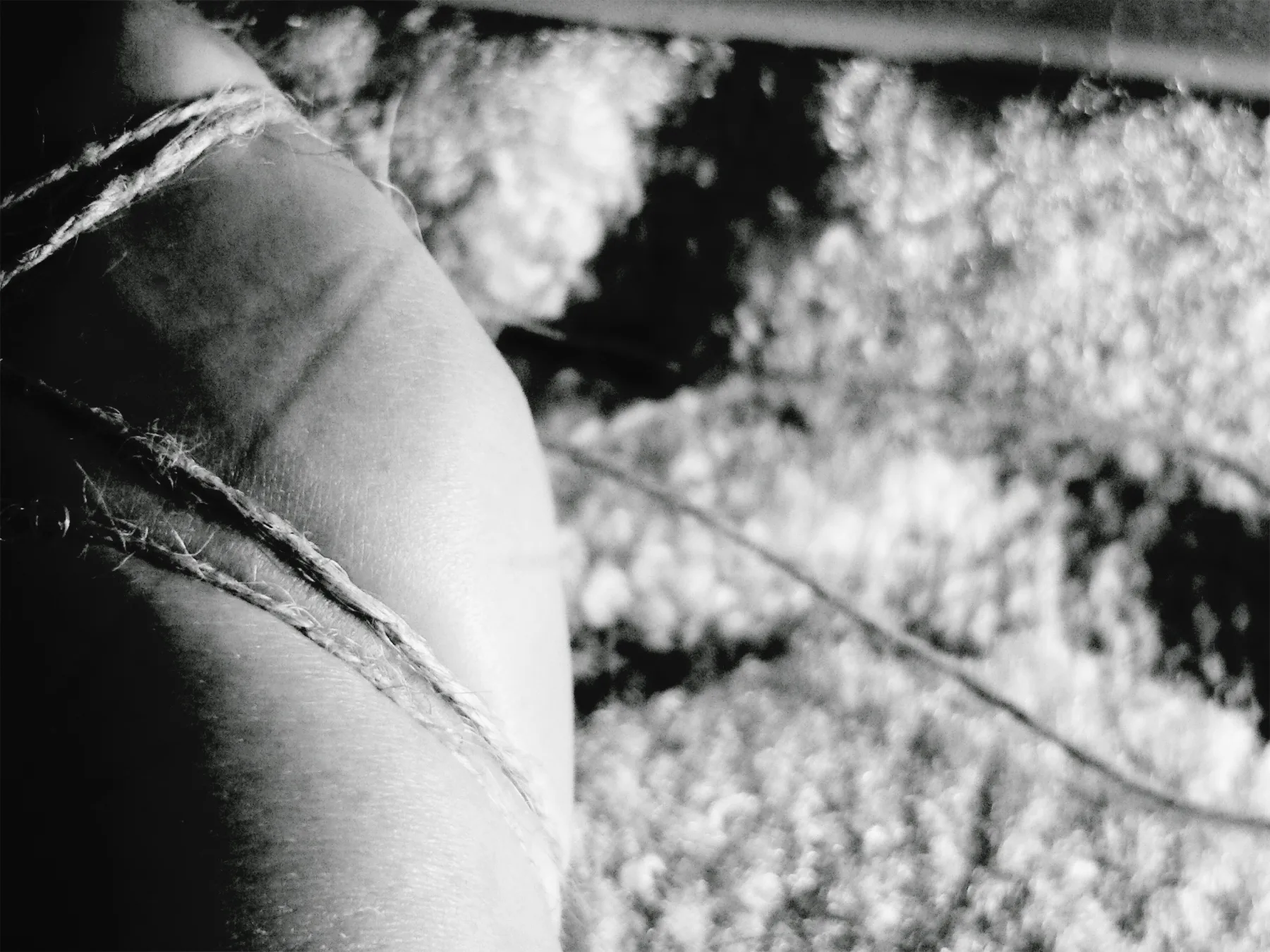
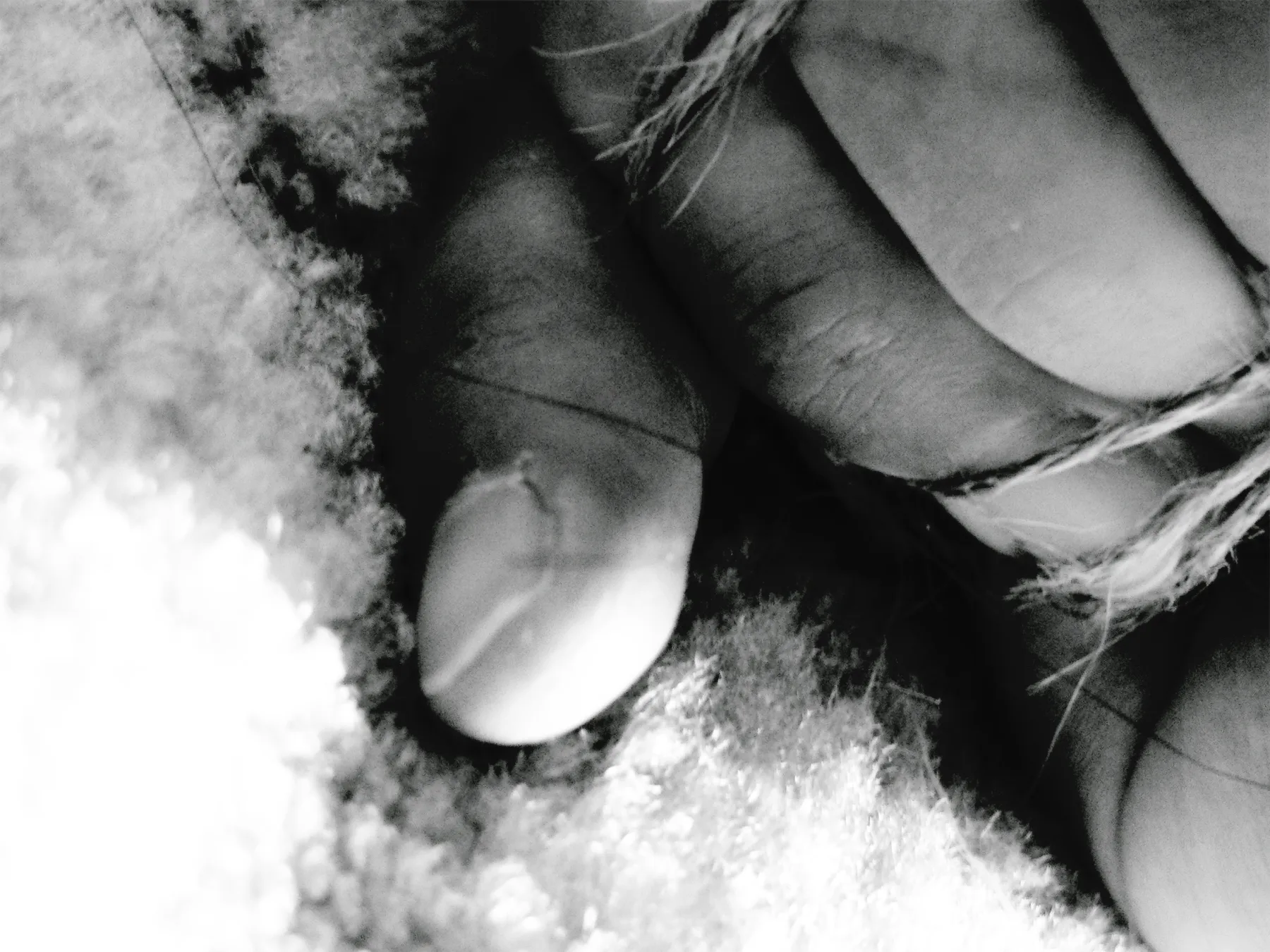
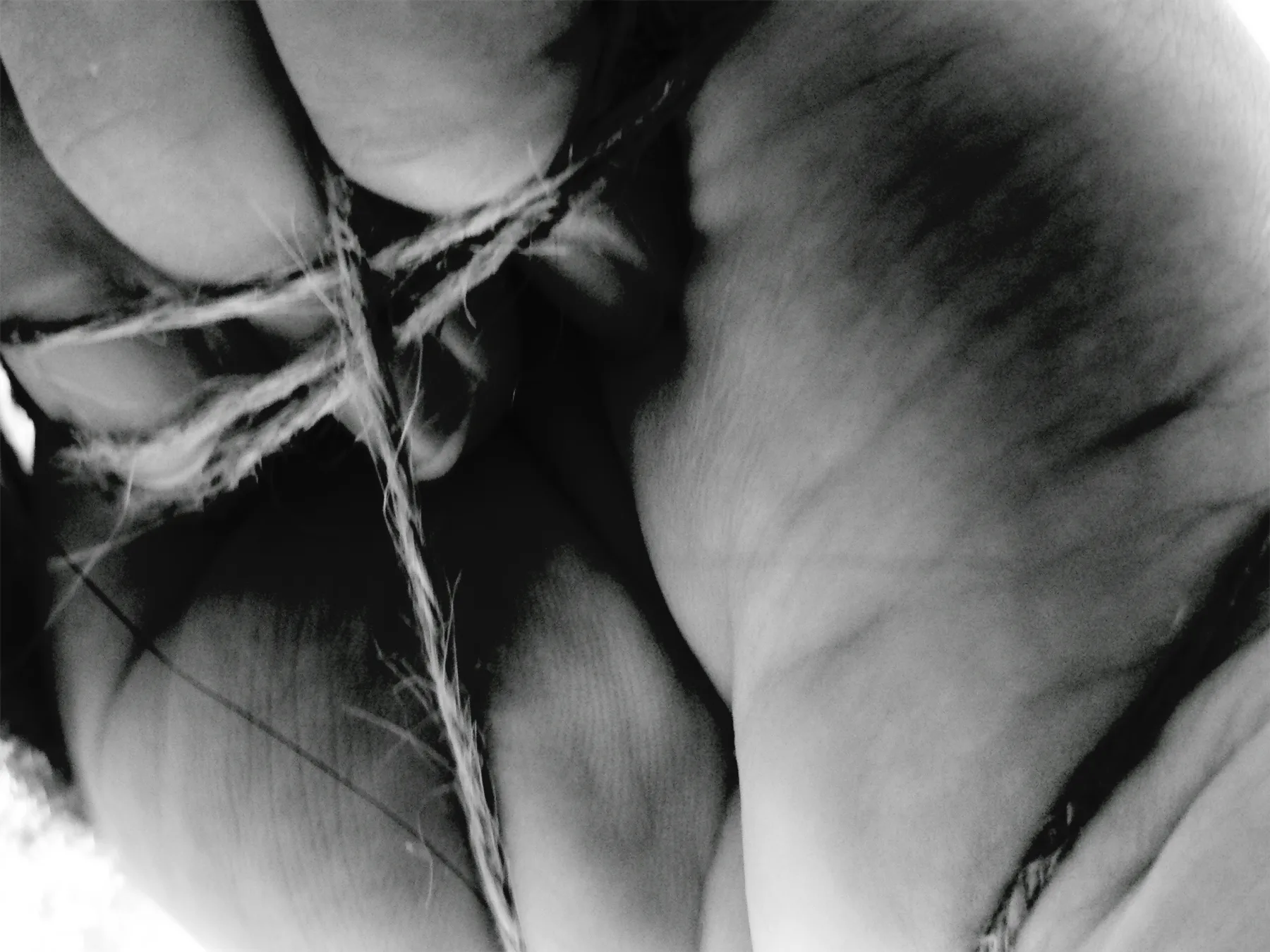
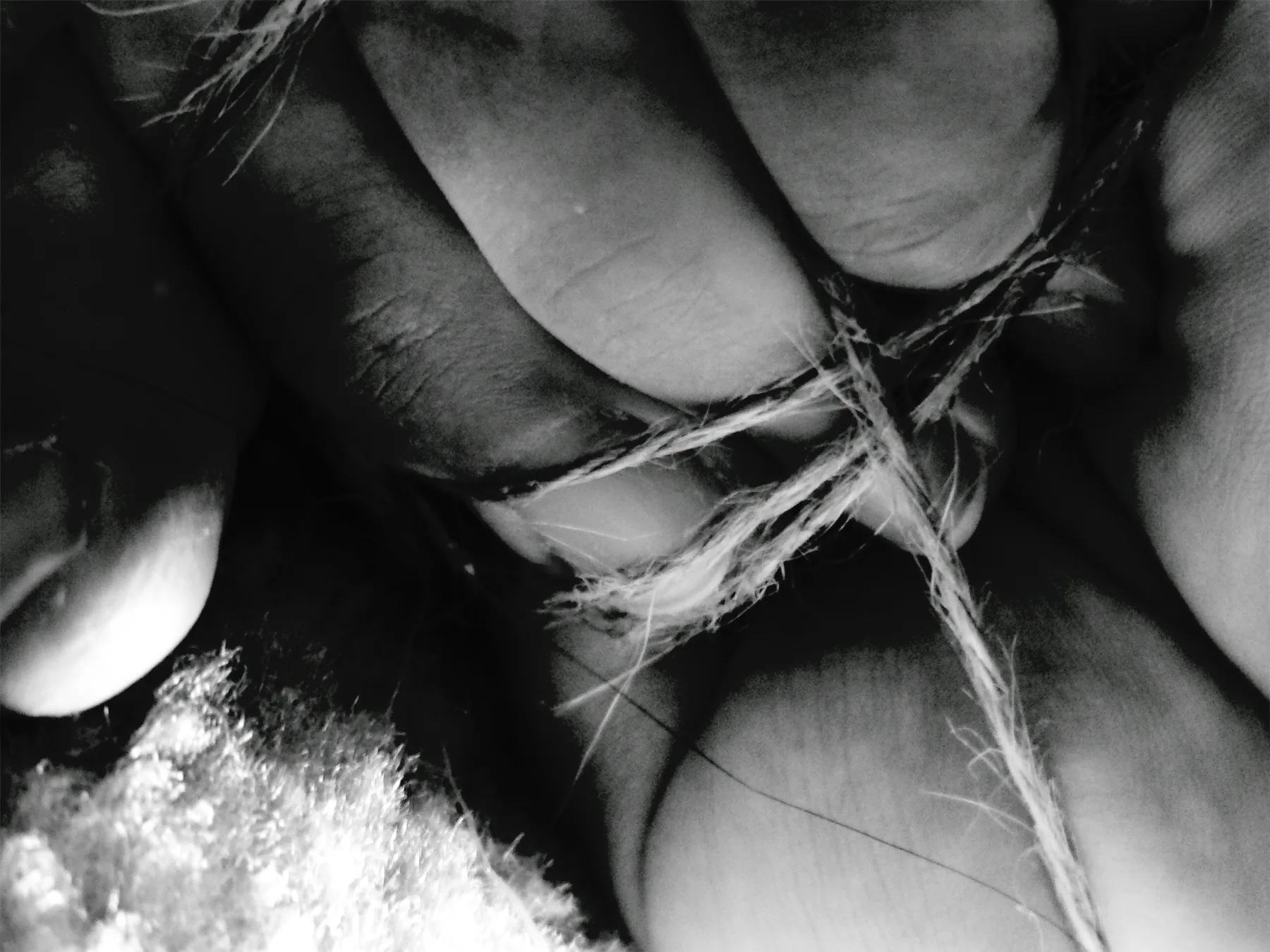
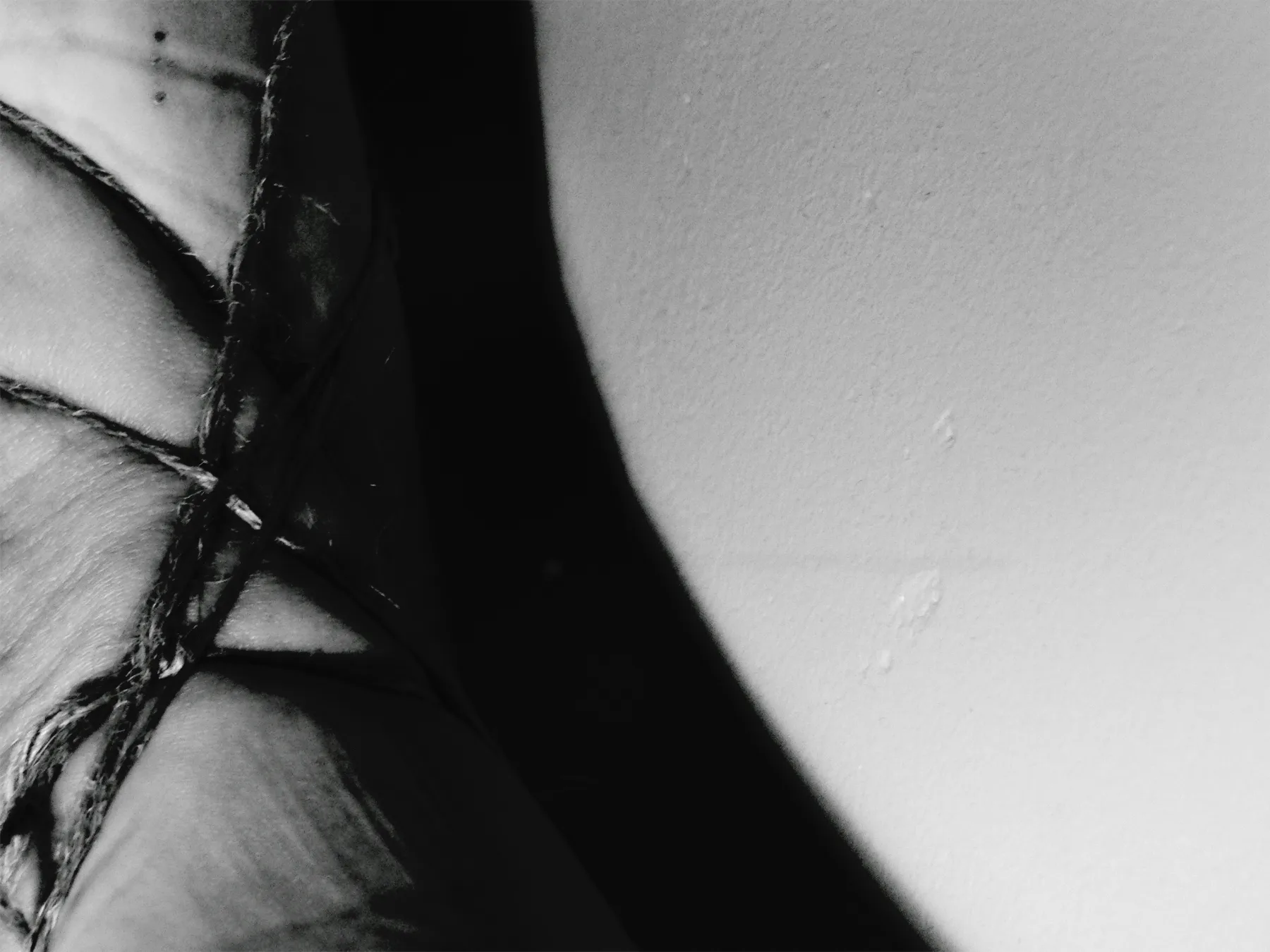
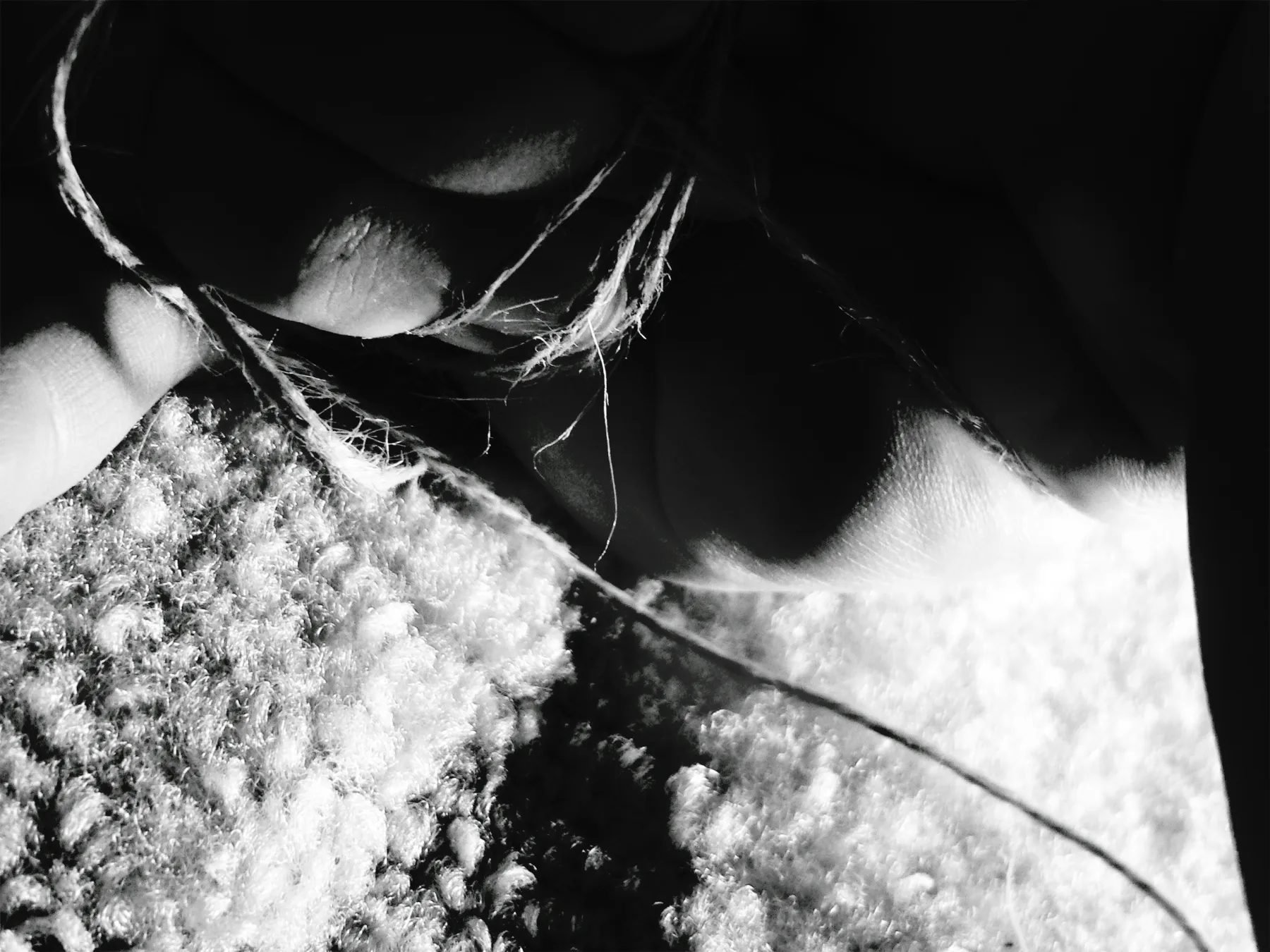
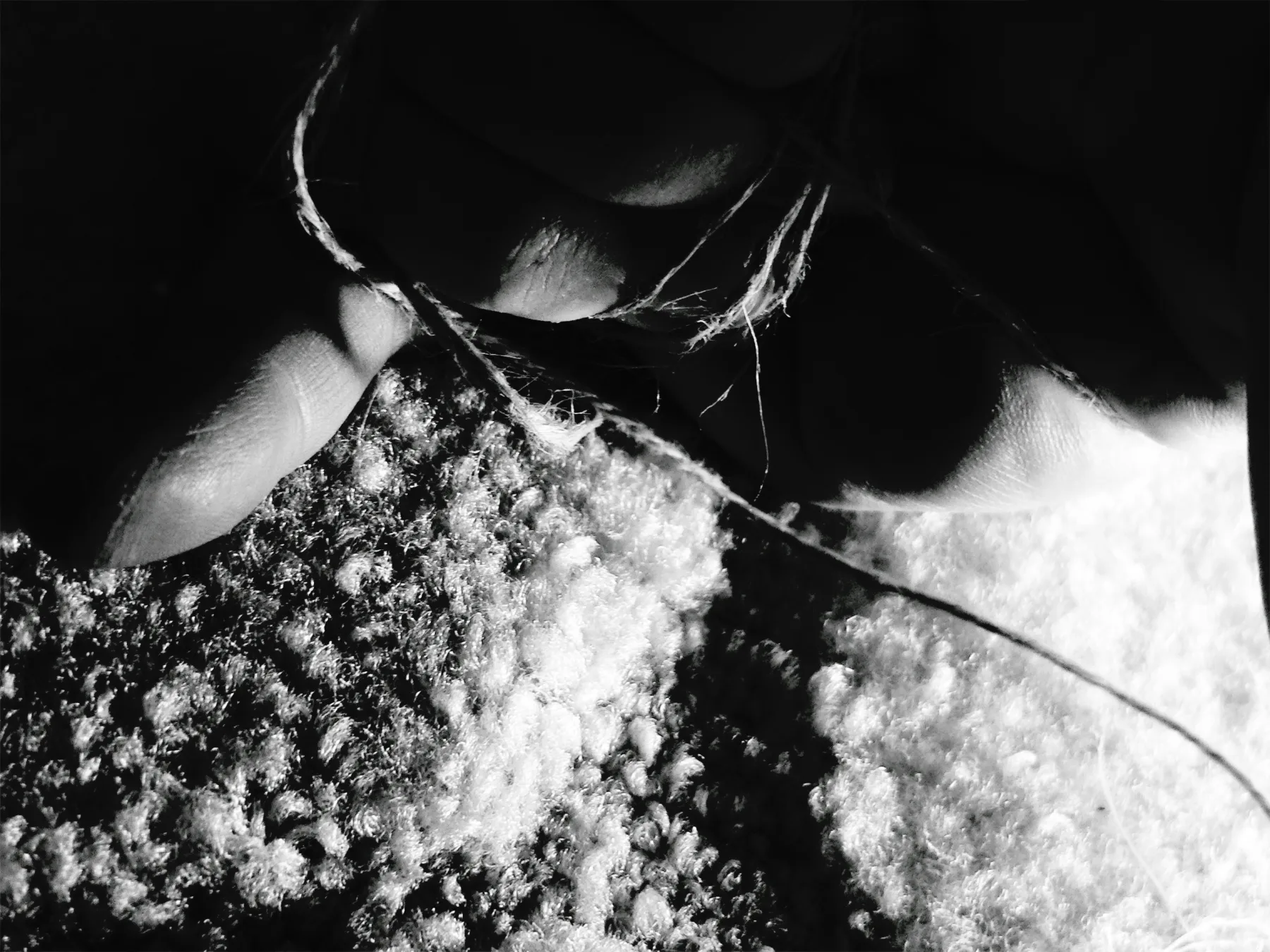
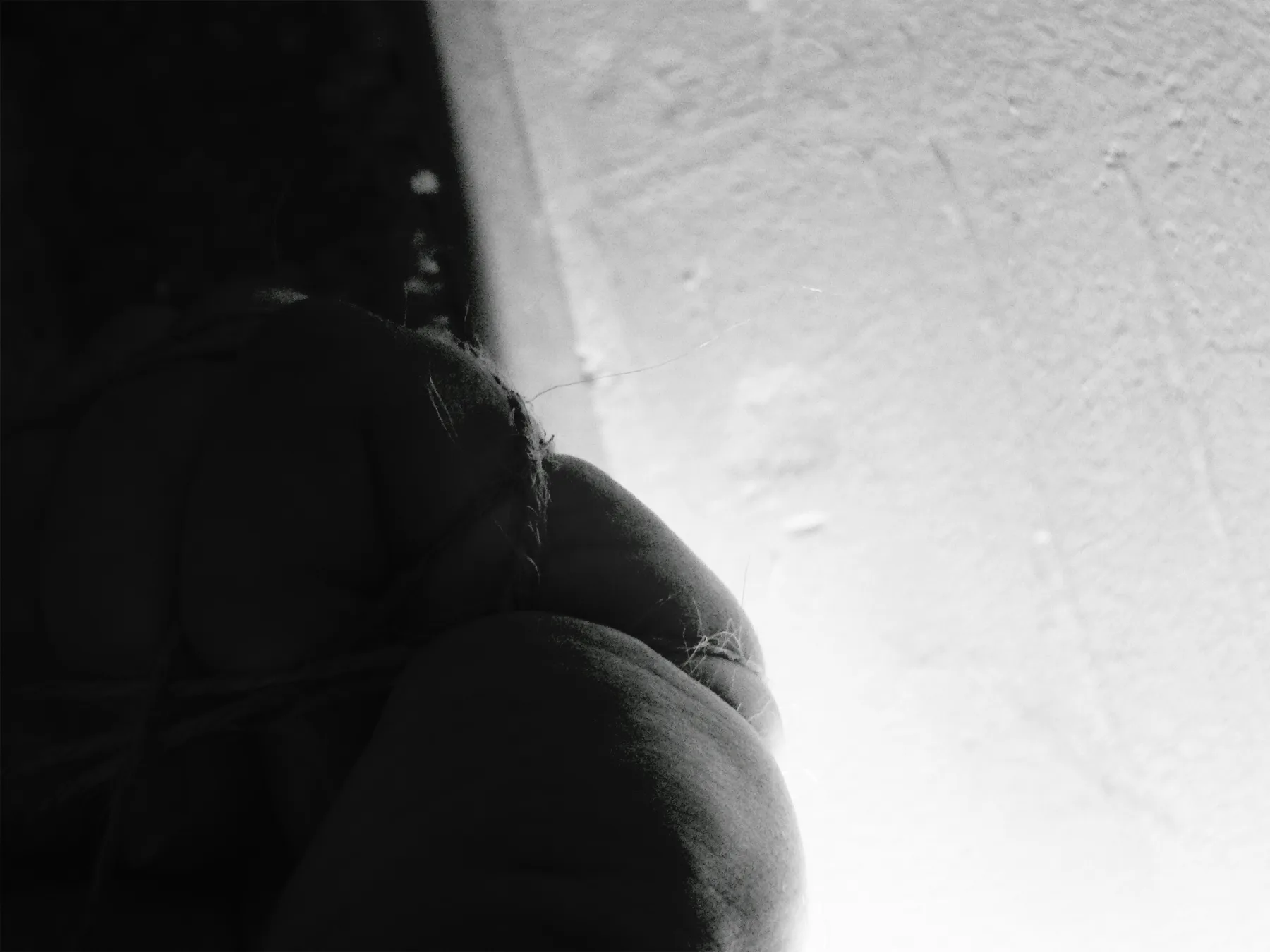
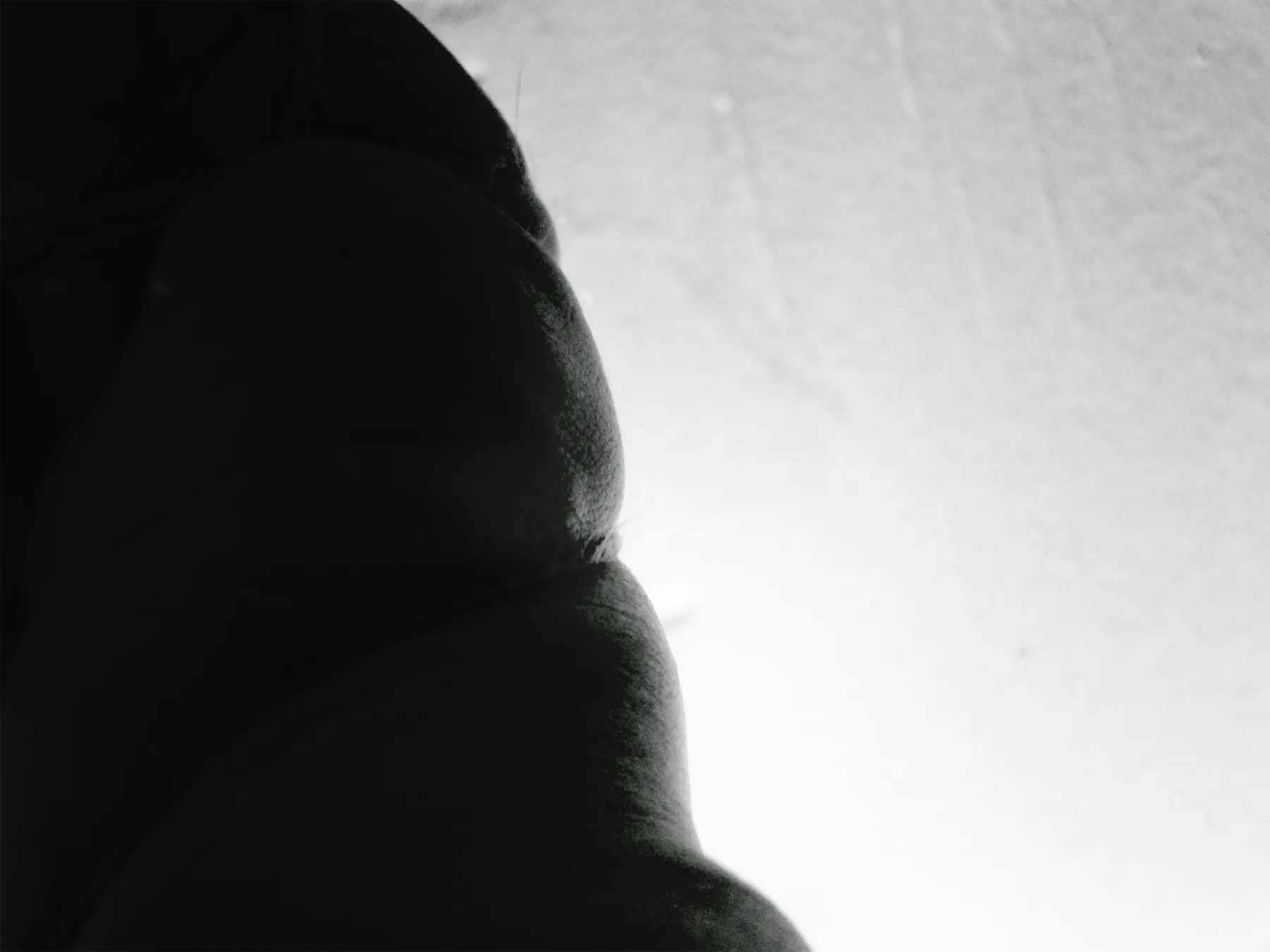
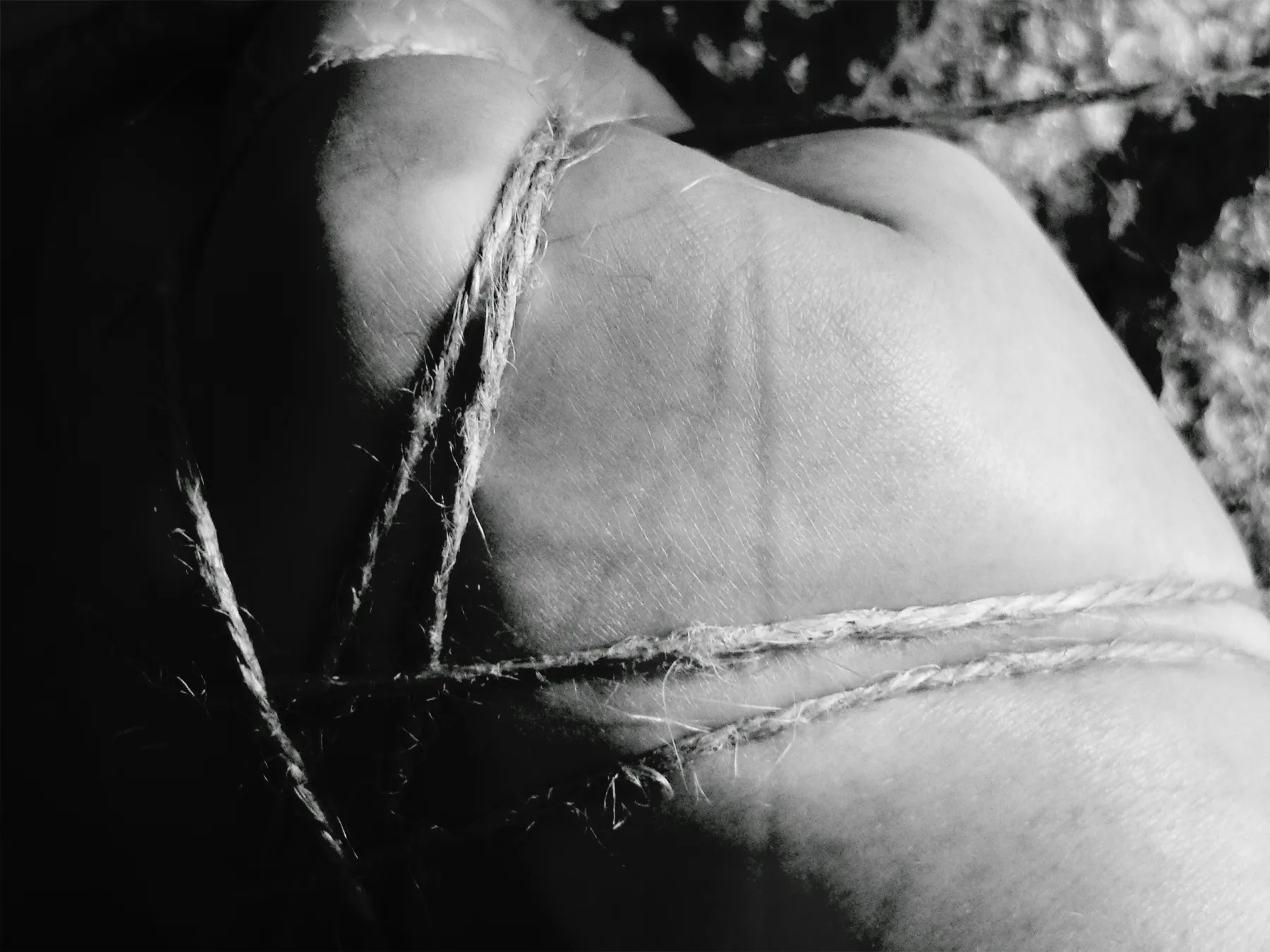
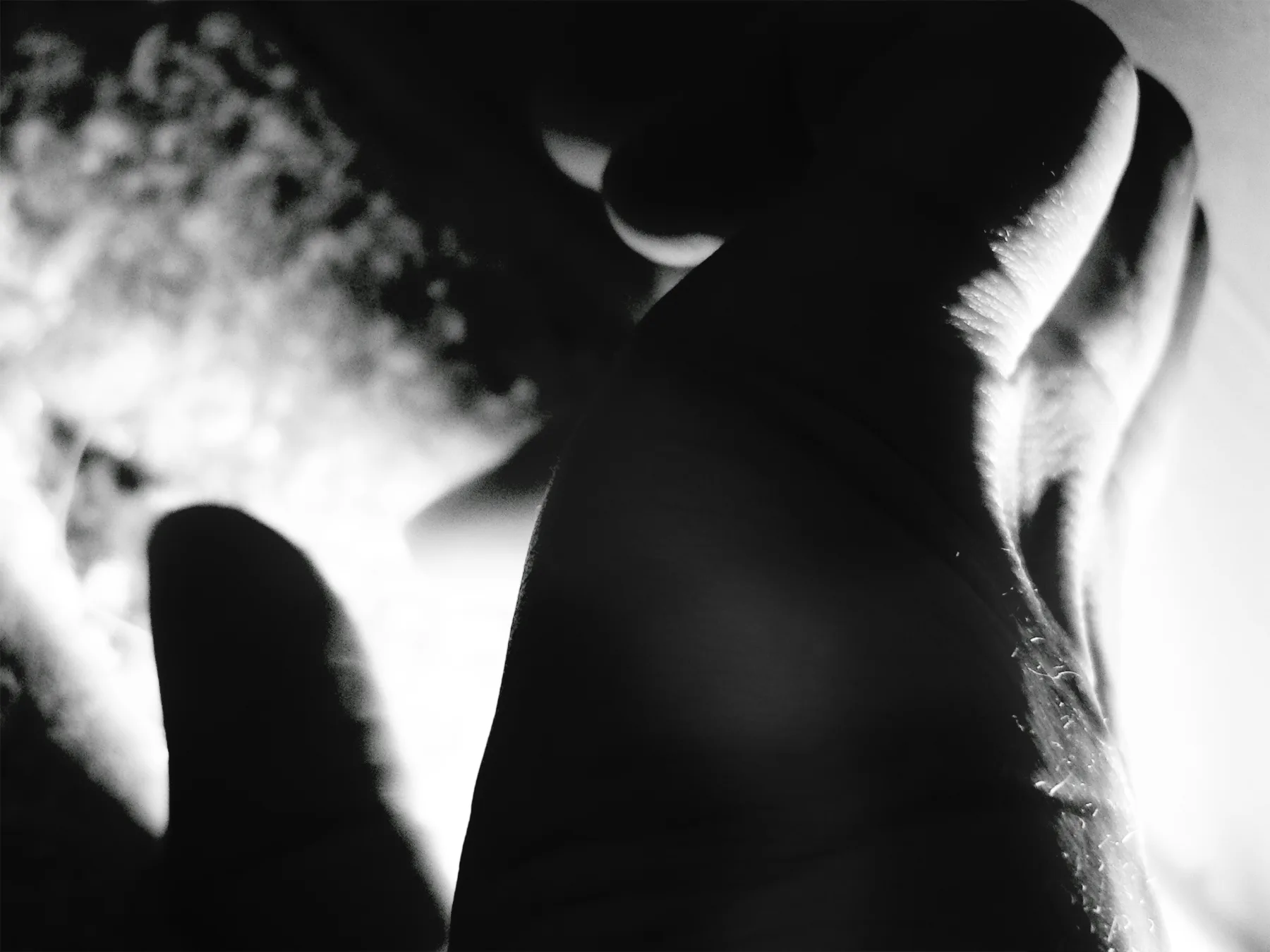
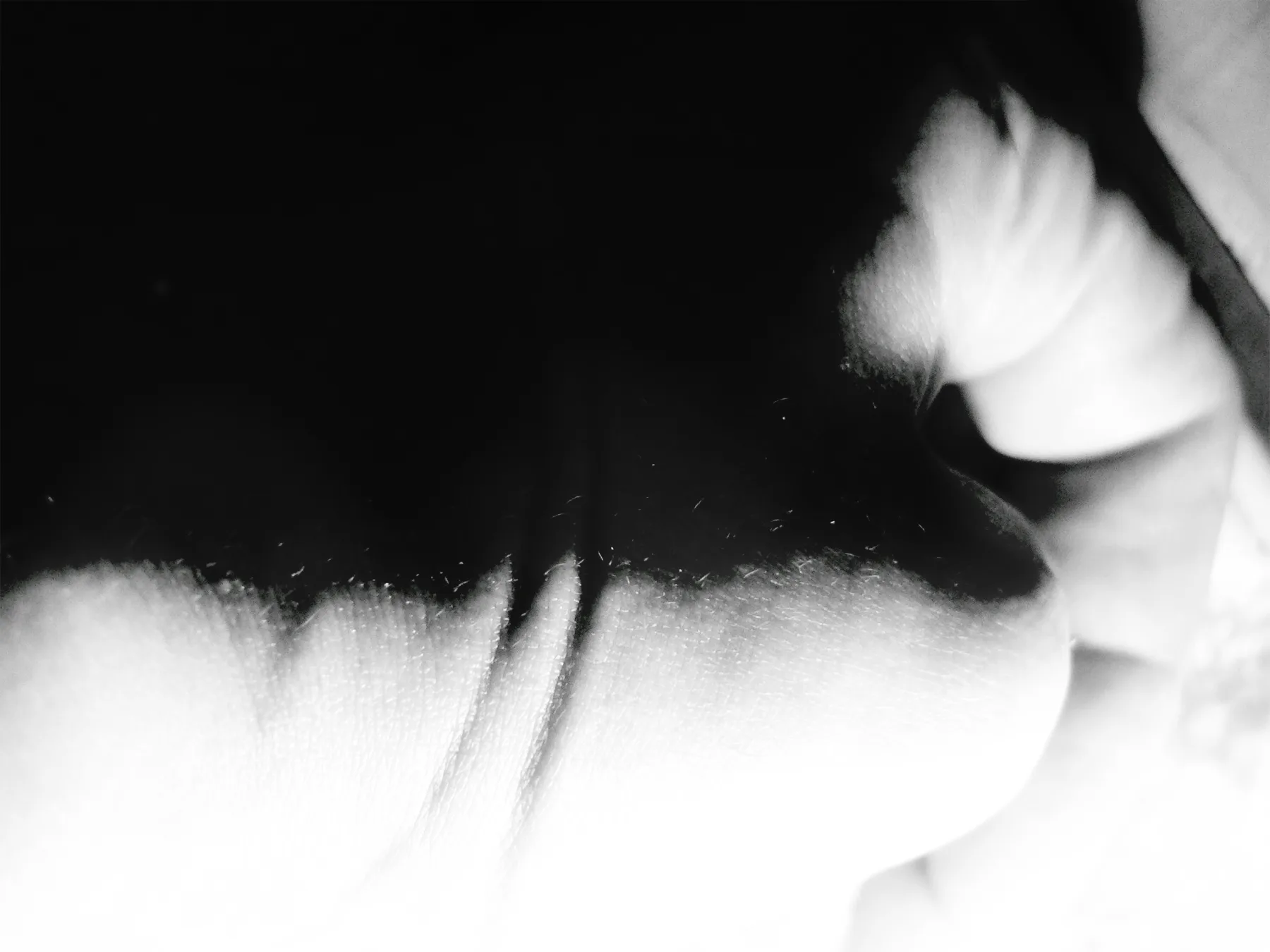
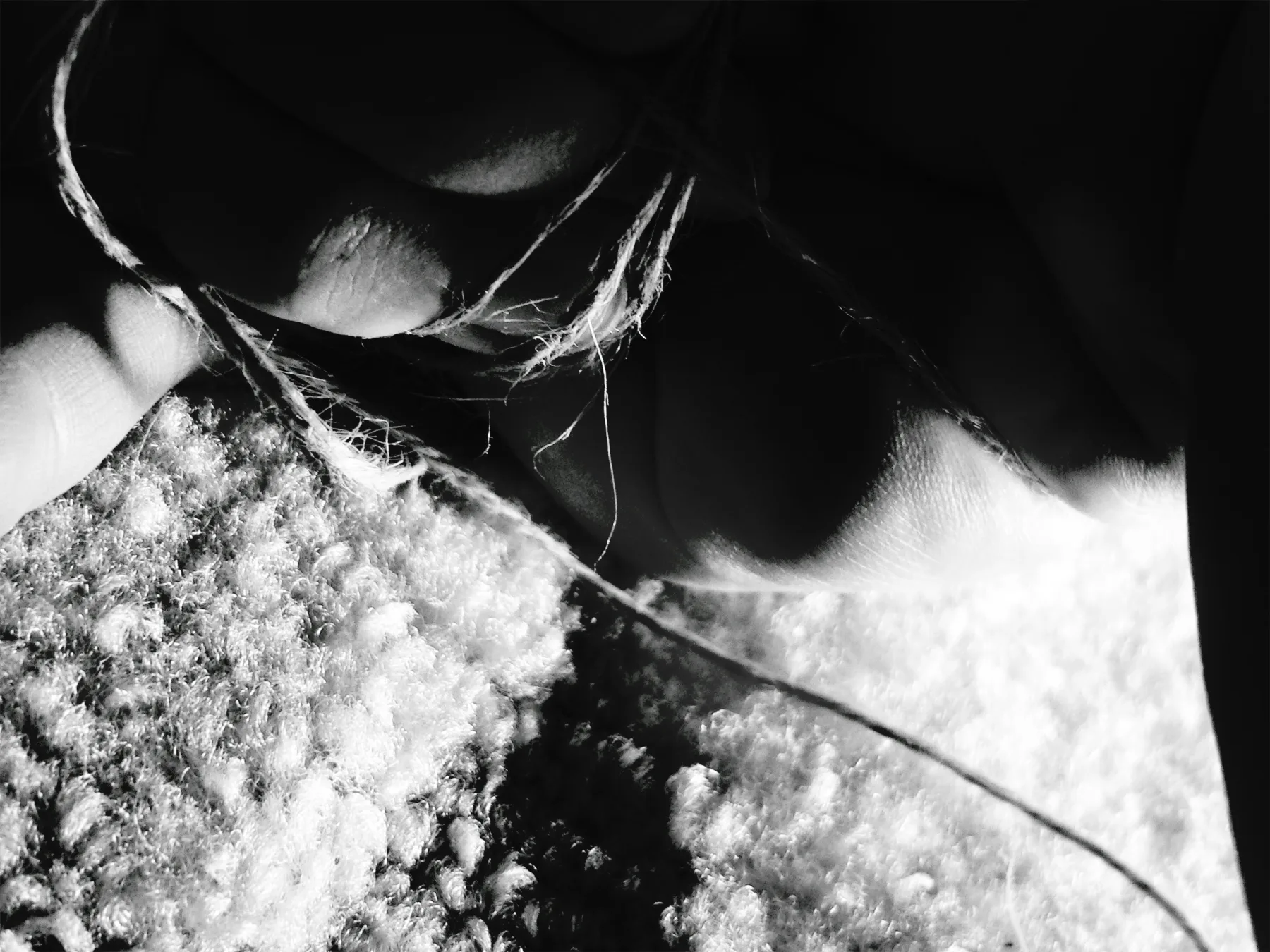
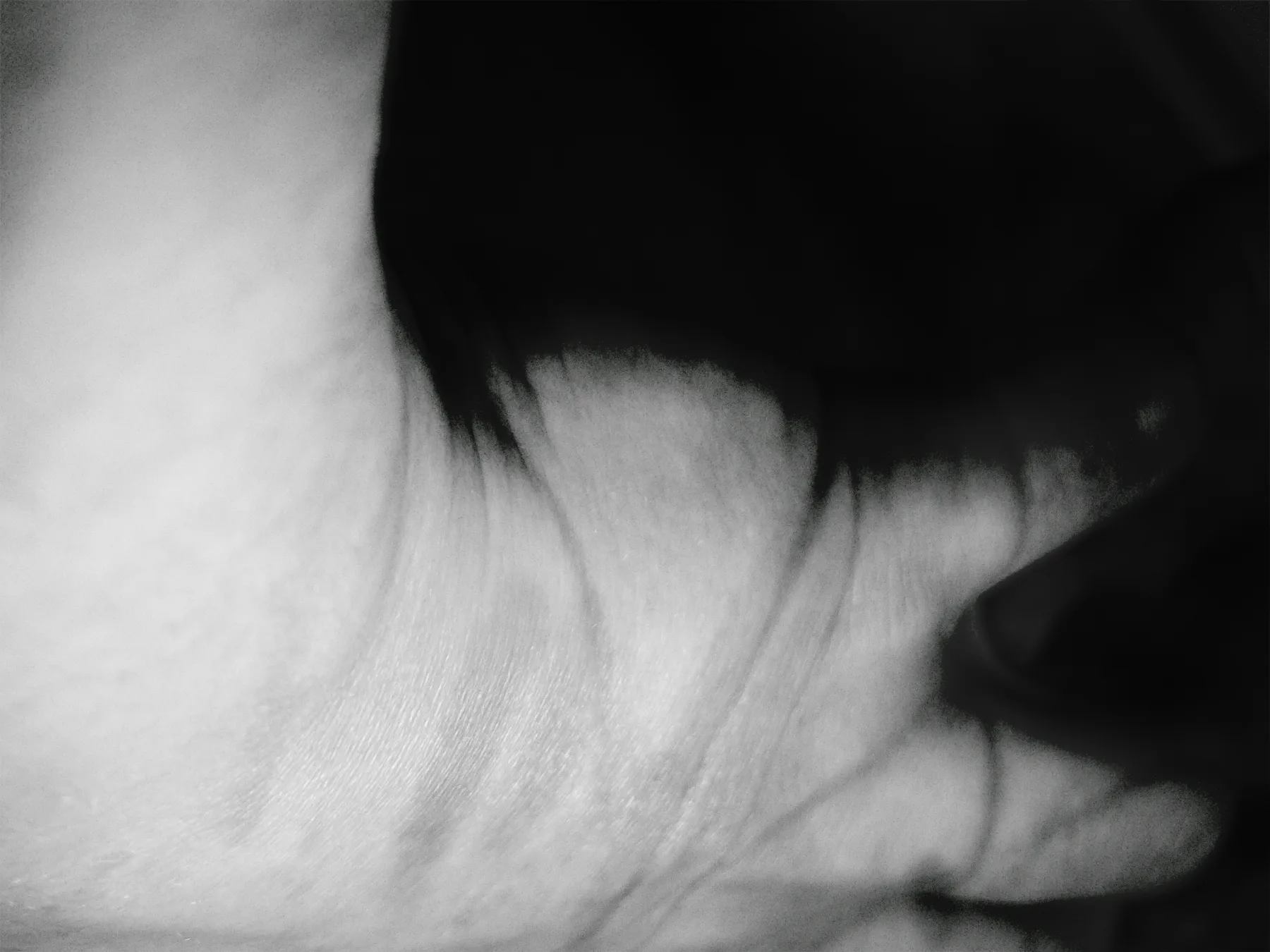
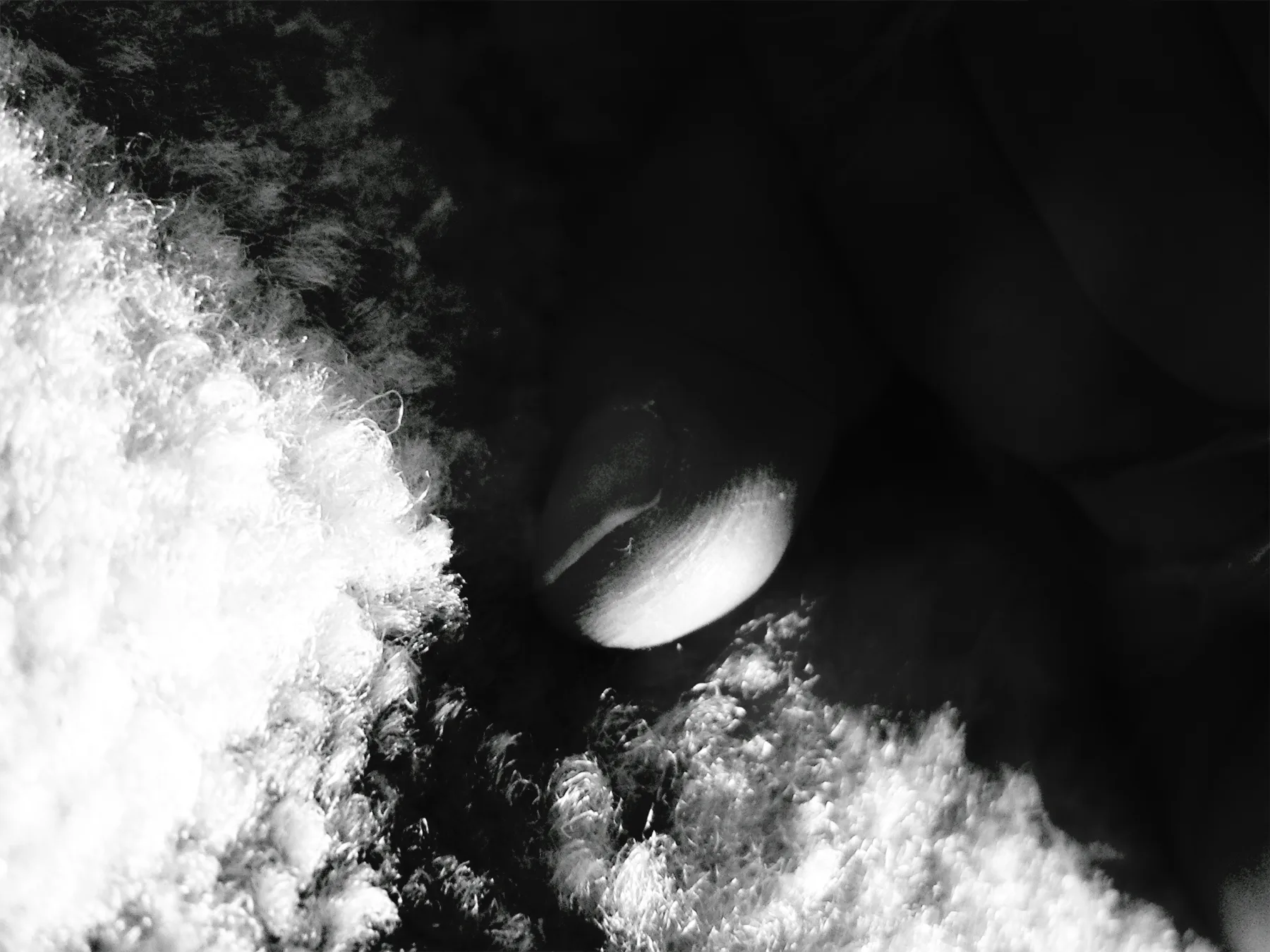
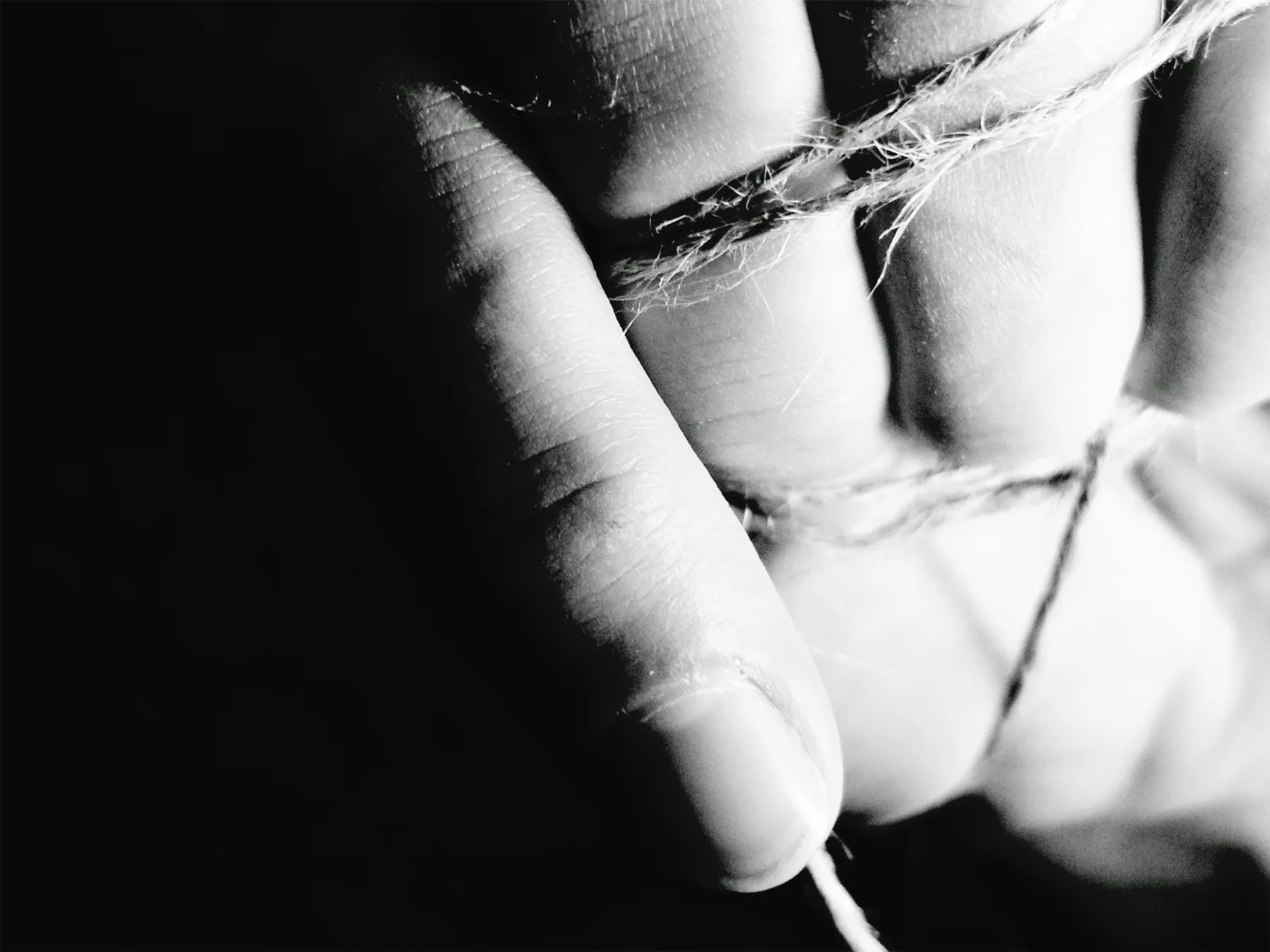
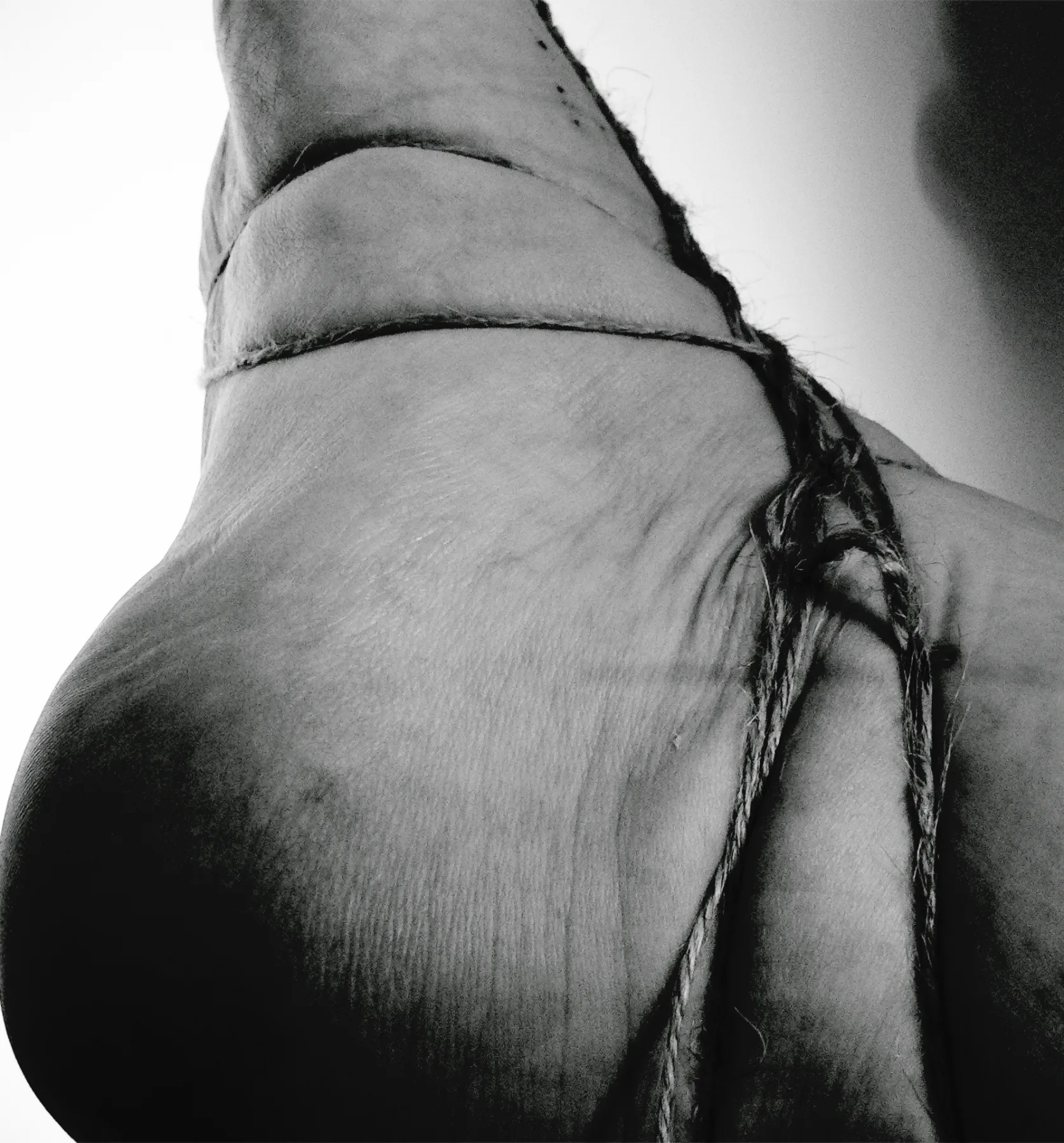
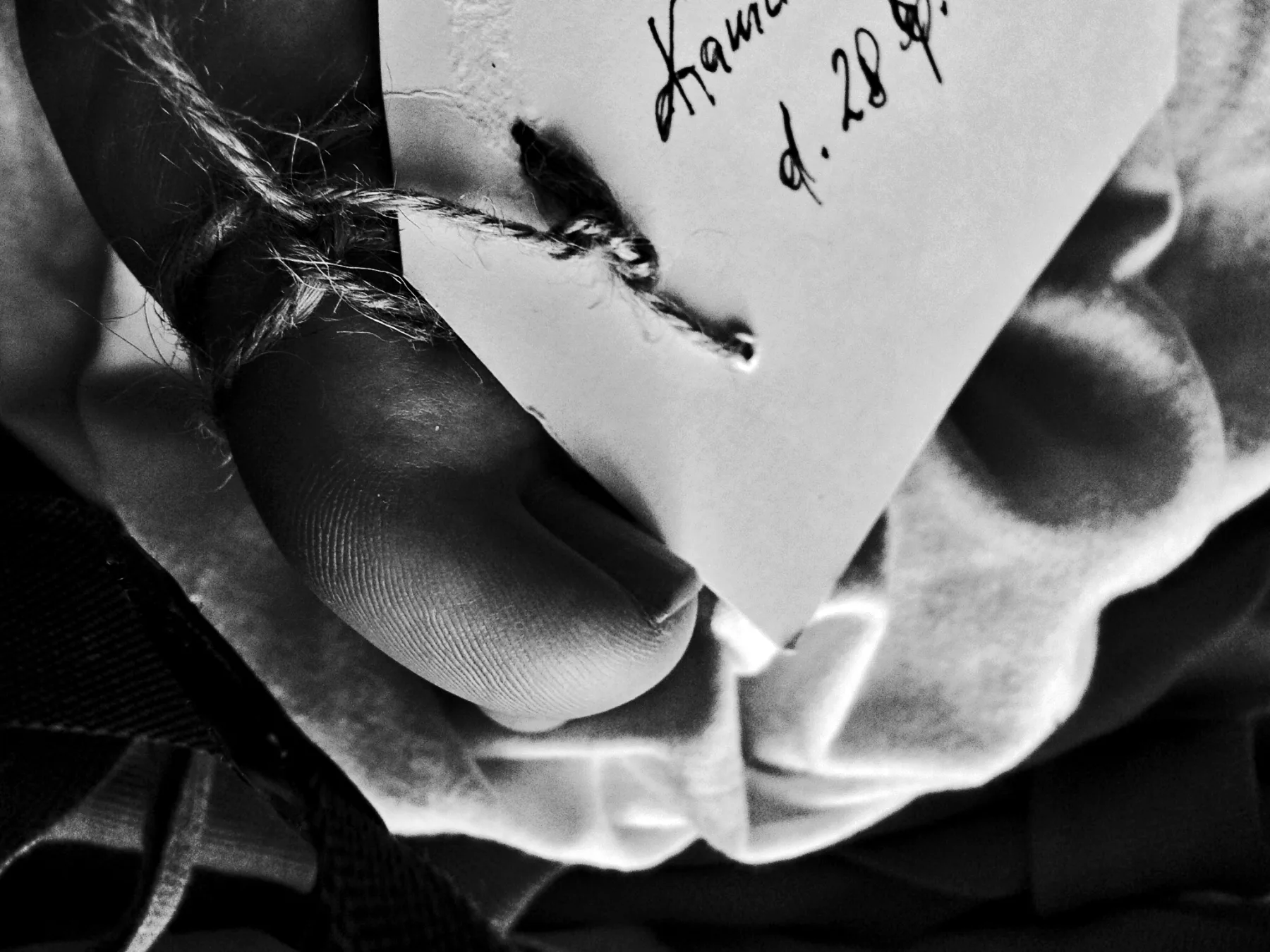
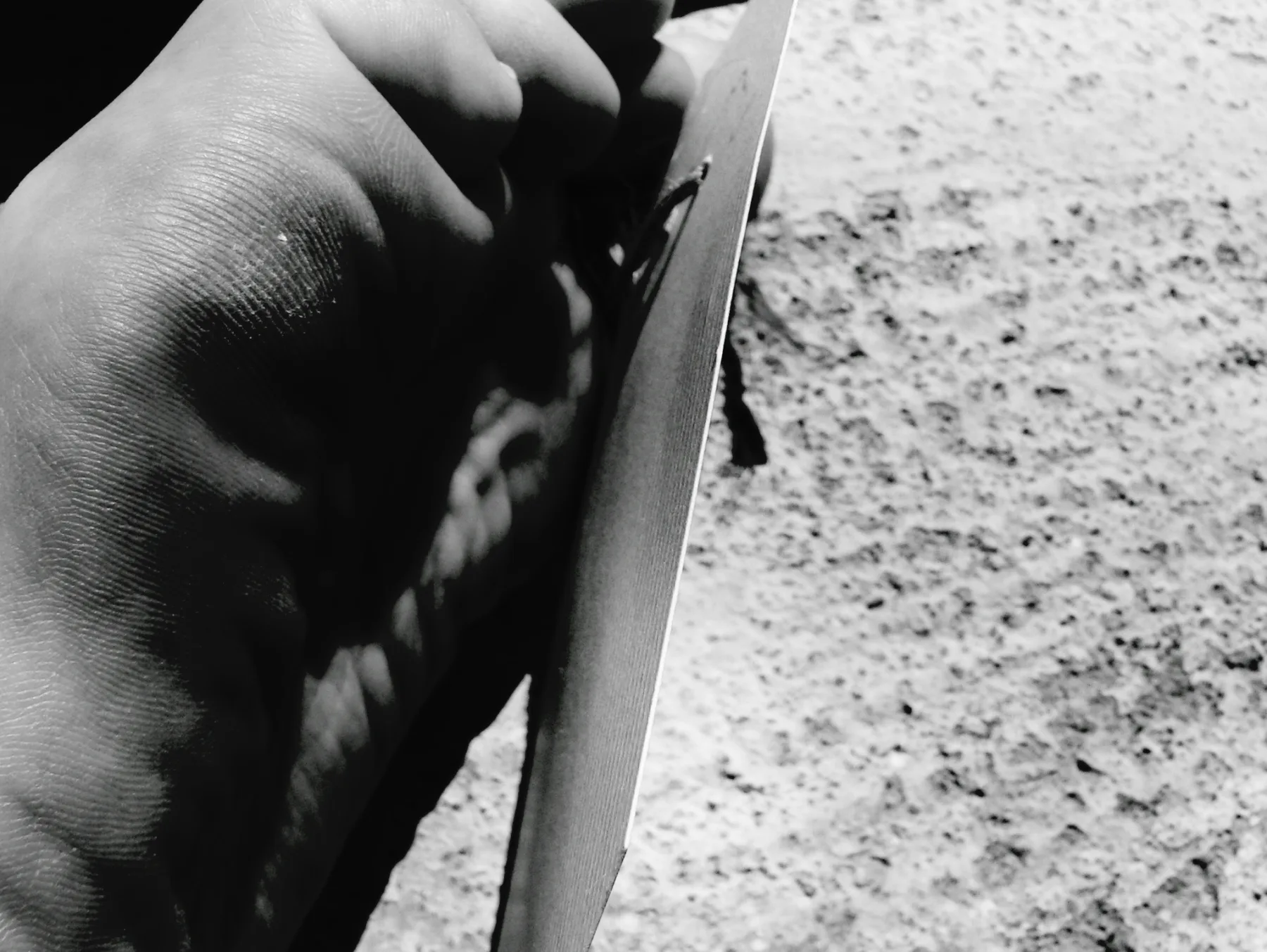
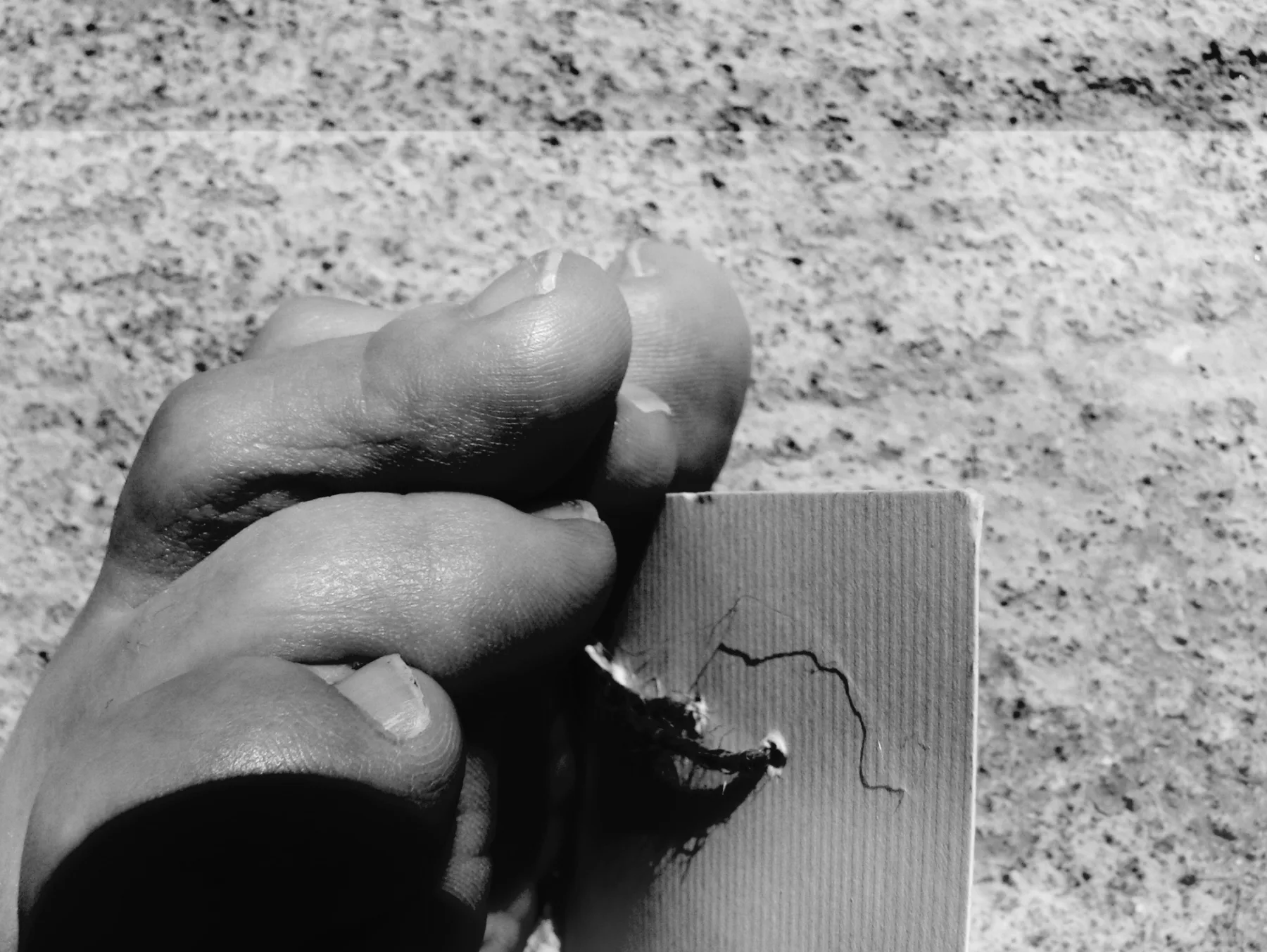
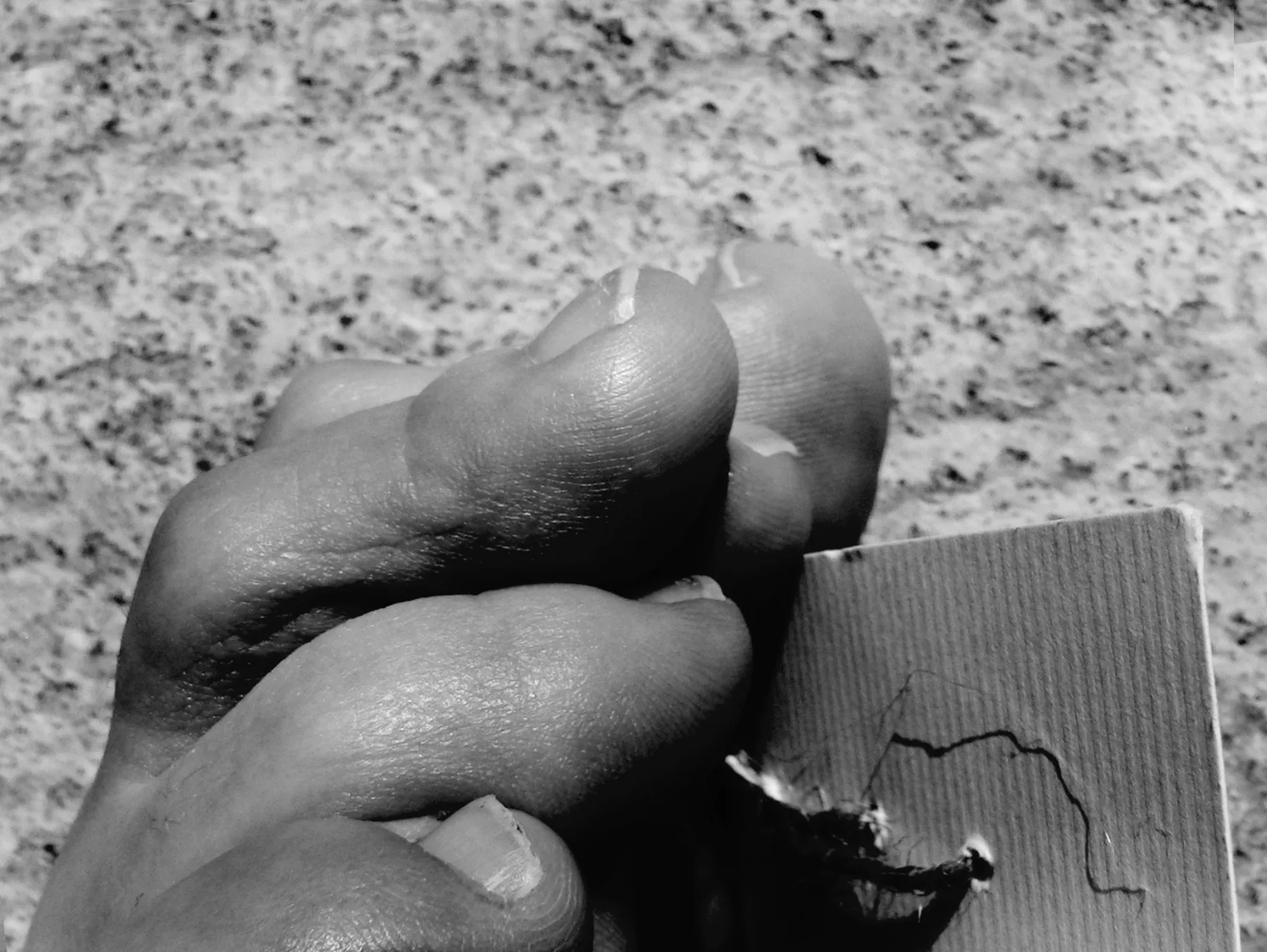
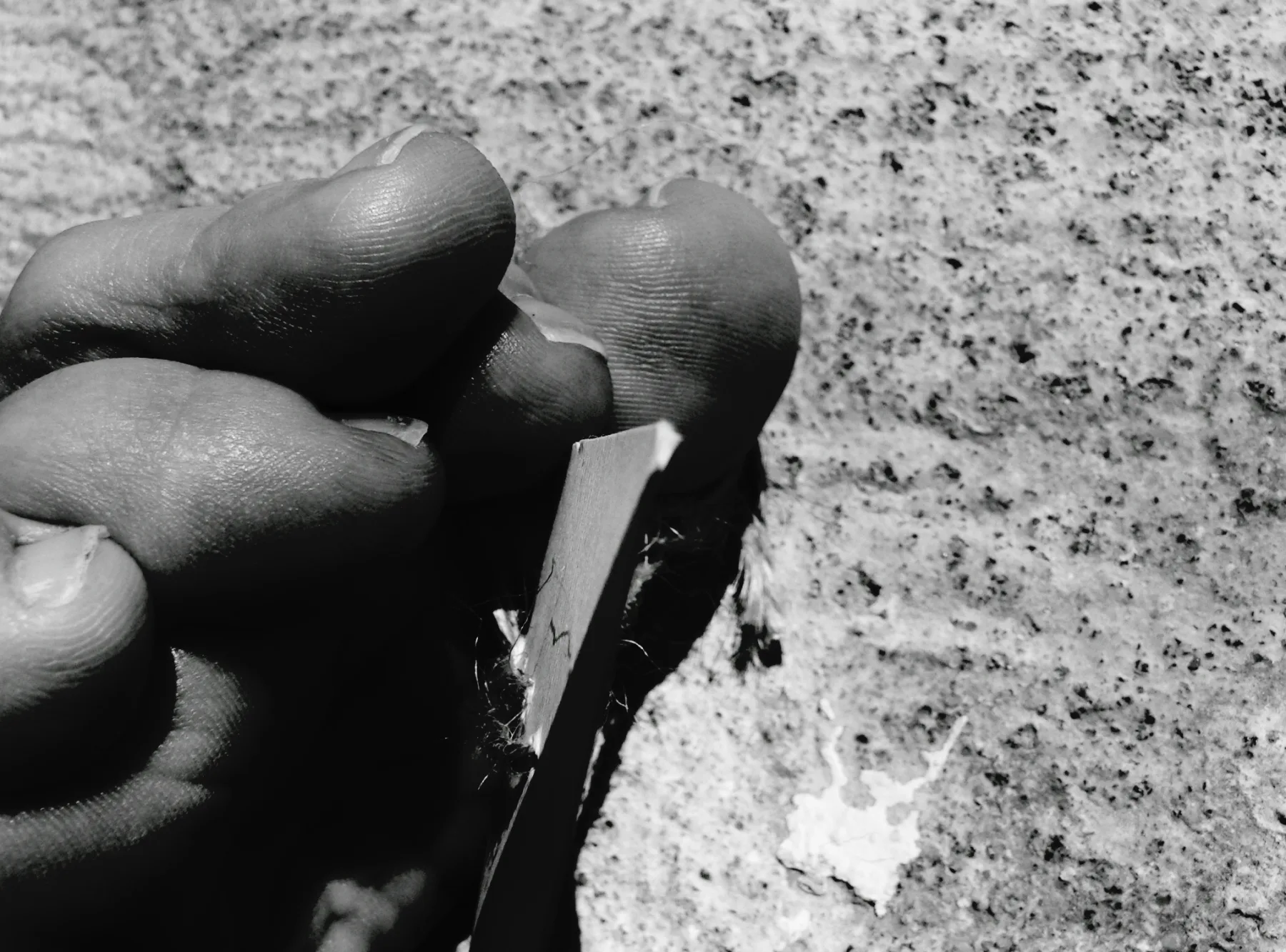
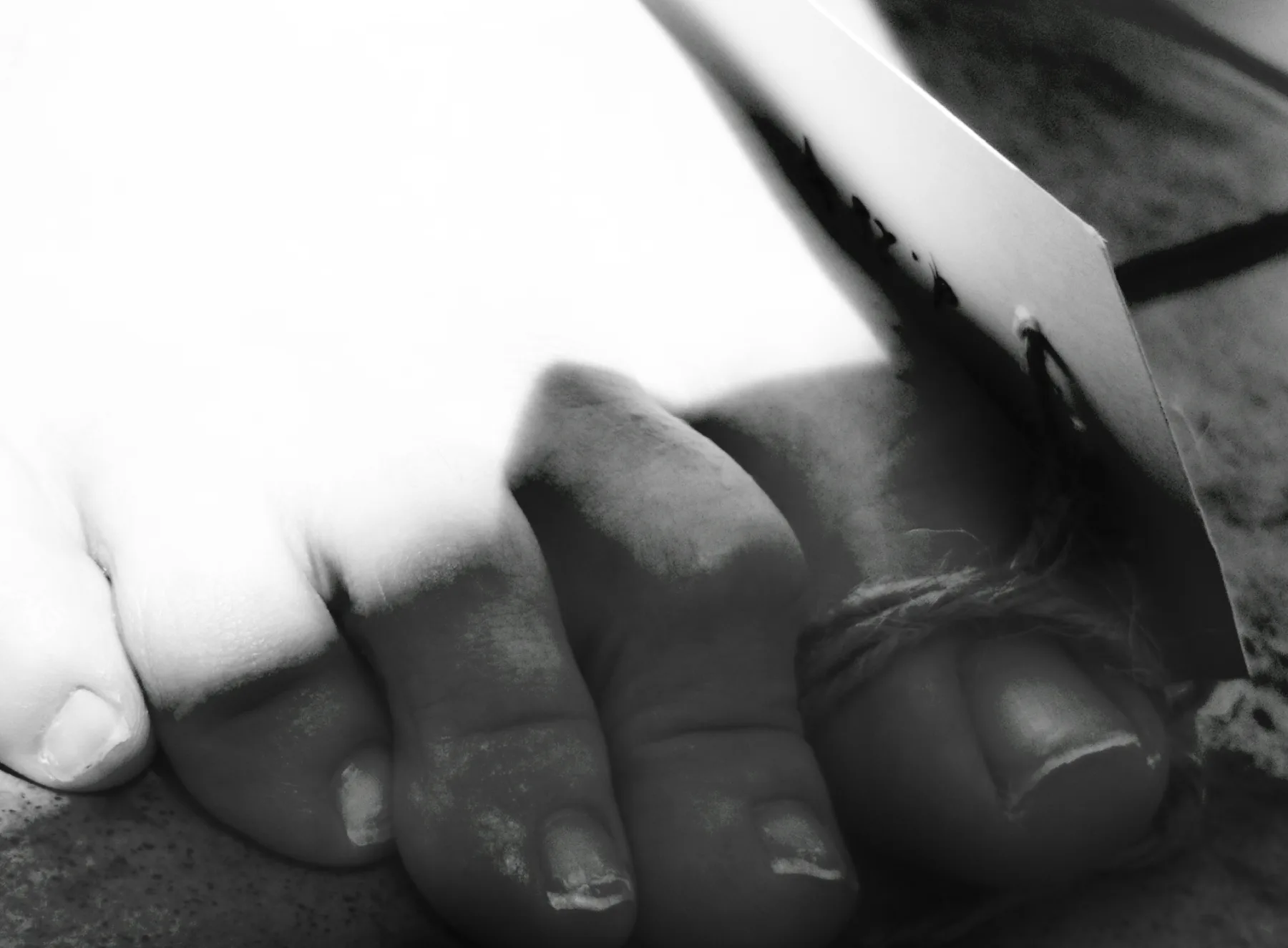
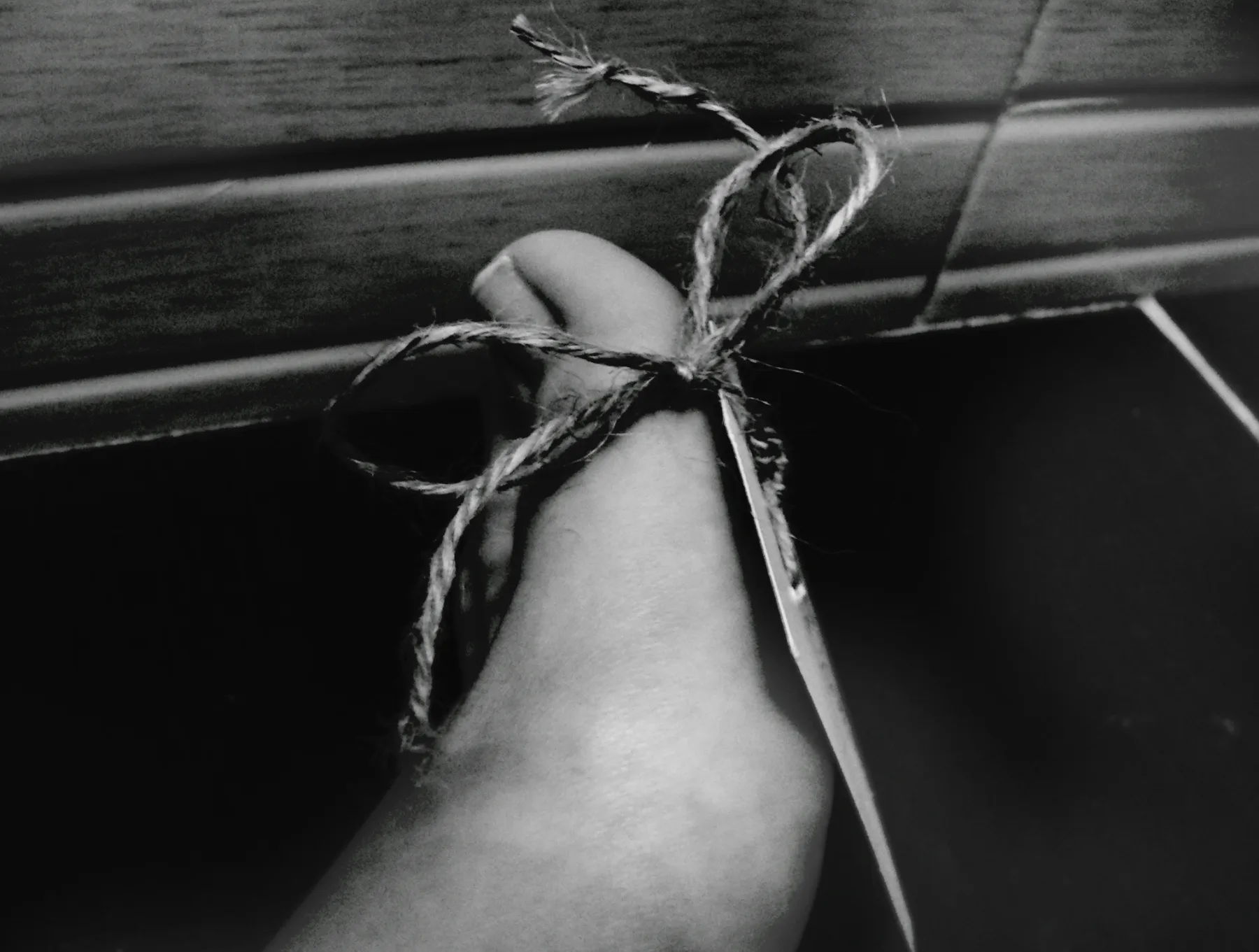
Pfishova’s earliest works, and the root of everything that followed. They were made not from a thesis but from experience and emotion — which is why they carry no separate titles and no borders between them: one gesture spread across three breaths that overlap. The artist binds her own hands and feet with rough twine, presses them into concrete and salt, lays a blade against the skin, and finally ties a handwritten tag to the body.
That tag has a double bottom. It is the card on a gift — and it is the tag from a mortuary. The kind tied to a body that belongs to no one now: the remainder of someone who has left, described in another’s hand, reduced to data. The same motion that wraps an offering is the motion that labels the dead. The bow turns living flesh into property; the tag turns it into a thing no longer needed by anyone. Dedication for master reads like a tender inscription on a book’s first page, humble and submissive. But the master never enters the frame. Only the one who binds remains, and what is bound — given to someone, or given to death, because in these images the two are the same.
These photographs are black and white not as a style. Pfishova grew up among post-mortem photographs — the old custom of photographing the dead in their coffins, or laid out in the family homes of smaller towns. The prints were then pasted into family albums and seen from the earliest age; hers were black and white. The camera that turns here toward the bound body looks at it the way it learned to look in childhood: as a body laid out, fixed, slipped between the album pages beside the living. From this comes what has been present in Pfishova’s life literally since childhood — an unceasing awareness of death, the quiet underside of every later work.
Salt preserves and burns the wounds at once. The blade is a threat, but also the printmaker’s tool — the same one that cuts the matrix. The body is the material being worked: tightened, marked, prepared to be pressed. Years on, these intuitions return knowingly, as the body, fear and systems of control that decide how the body is seen, measured and held. Here, in 2007/2008, they are still bare — and the system of control already has two hands, one of them her own.